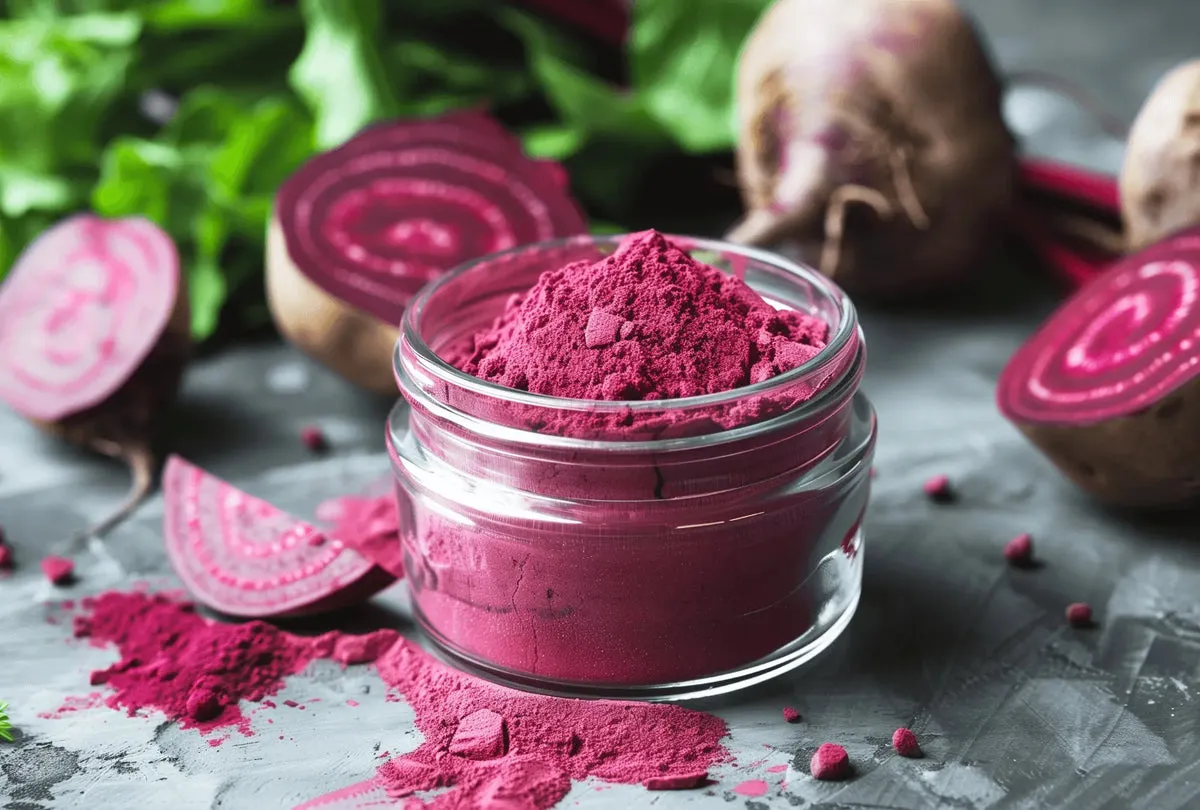
Beetroot is used in food manufacturing as both a vegetable ingredient and a source of red or pink color. Its natural pigments can create shades ranging from soft pink to deep red.
The final color depends on the beet variety, manufacturing method, product recipe, processing temperature and storage conditions. Beetroot color is useful, but it is not a direct replacement for every synthetic red dye.
Quick Answer
Beetroot food coloring comes mainly from water-soluble pigments called betalains. Manufacturers may turn whole beets or beet juice into liquid concentrates, dried beet powder or standardized color preparations. Beet color works best in products with limited heat exposure and controlled storage because light, oxygen and high temperatures can reduce its color strength.
What Is Beetroot Food Coloring?
Beetroot food coloring is a color ingredient produced from red beet, commonly known as Beta vulgaris. It may be supplied as juice, concentrate, extract or powder.
Beetroot contains a group of pigments called betalains. These pigments are mainly divided into red-violet betacyanins and yellow-orange betaxanthins.
Betanin is the main red-violet pigment associated with beetroot color. The balance and concentration of these pigments affect the final shade.
In the European Union, beetroot red is commonly identified as E162. Product names and labeling rules differ by country, so manufacturers must check the regulations for every target market.
Is Beetroot Color Natural?
Beet color is derived from a plant source, but “natural” can have different legal and marketing meanings across countries.
A food company should not assume that plant-derived automatically means unrestricted. The ingredient, production process, permitted foods and required label name must comply with local regulations.
The U.S. Food and Drug Administration lists dehydrated beets, or beet powder, as a color additive exempt from batch certification for permitted food uses. Exempt from certification does not mean exempt from safety, manufacturing or labeling requirements.
The FDA also distinguishes beet powder, vegetable juice and other listed color preparations. A supplier should provide a clear ingredient identity rather than using a broad “natural color” description alone.
Why Food Manufacturers Use Beetroot Color
Consumers often prefer ingredient lists that contain familiar plant-based sources. Beetroot can support this type of clean-label product development when it is suitable for the recipe.
Manufacturers may choose it because it offers:
- Plant-derived red and pink shades
- Water-soluble color
- Options for vegan formulations
- Liquid and powder formats
- Use in many low-heat applications
- Familiar ingredient recognition
- Compatibility with selected foods and beverages
However, a buyer should not assume that every commercial beet color is a single-ingredient powder. Some preparations include carriers, stabilizers or processing aids.
Always review the specification sheet and ingredient declaration before approving the material.
Where Beetroot Food Coloring Is Used
Beetroot coloring can be used in several food categories, but performance must be tested in the final recipe.
Common applications include:
- Frostings and icings
- Gummies and soft candies
- Yogurt and dairy desserts
- Plant-based dairy products
- Ice cream
- Smoothies
- Fruit drinks
- Dry beverage mixes
- Snack coatings
- Seasoning blends
- Soups and sauces
- Plant-based foods
It often performs well when the product does not require severe heat treatment or a very long shelf life under bright light.
A successful laboratory sample does not guarantee stable color after manufacturing, shipping and storage. Shelf-life testing is essential.
Understanding Betalain Stability
Betalains are water-soluble pigments that can be sensitive to processing conditions. Color loss may appear as fading, browning or a shift away from the intended red shade.
Important factors include:
Heat
High temperature and long heating time can reduce betalain stability. This makes beetroot color more challenging in baked, retorted or heavily pasteurized products.
Manufacturers should add the color at the lowest practical temperature when the production process allows it.
Light
Light exposure can weaken natural pigments during storage. Clear packaging may therefore create a higher risk than opaque or light-resistant materials.
Test the product under the lighting conditions it will face in shops, warehouses and customer homes.
Oxygen
Oxygen can contribute to pigment degradation. Headspace, mixing methods and packaging barriers can affect the rate of color loss.
Airtight packaging and controlled processing may help, but the correct approach depends on the food system.
pH
Beetroot pigments are often more useful in mildly acidic or near-neutral products than in extremely acidic conditions. The exact performance depends on the formulation and processing method.
Test the real product rather than relying only on a general pH range from a supplier brochure.
Water Activity and Moisture
Dry beet powder can absorb moisture from the environment. This may cause clumping, poor flow and faster quality loss.
Moisture-resistant packaging and proper storage are important for industrial powders.
Other Ingredients
Vitamin C, minerals, proteins, sweeteners and other food components may change the color or stability of betalains.
A color that performs well in water may behave differently in yogurt, frosting or a protein drink.
How Beetroot Powder Is Manufactured
Beetroot powder manufacturing can use whole beetroot, beet juice or a concentrated extract. The exact process varies according to the intended product.
1. Raw Beet Selection
Manufacturers select mature beetroots with suitable color, flavor and quality. Raw material consistency affects pigment concentration and final powder performance.
Supplier controls may include variety, maturity, growing conditions, pesticide requirements and limits for damaged roots.
2. Receiving and Inspection
Incoming beets are checked for physical damage, decay, foreign material and other quality issues. Samples may also be tested according to the manufacturer’s food safety plan.
Rejected raw material should be separated before it enters production.
3. Washing and Trimming
Beets grow in soil, so thorough washing is necessary. Stones, soil and damaged parts are removed before further processing.
The cleaning system should reduce contamination without damaging the raw material more than necessary.
4. Cutting or Crushing
Whole beets may be sliced, diced, shredded or crushed. Smaller pieces increase surface area and make drying or juice extraction easier.
Processing conditions should limit unnecessary exposure to heat and oxygen.
5. Juice Extraction or Whole-Beet Processing
For an extract-based color, the beetroot may be pressed or processed to separate juice from solid material. The juice can then be filtered and concentrated.
For whole-beet powder, the prepared beet pieces are dried and milled. This type of powder may contain more of the original vegetable solids and flavor.
These two powders are not automatically interchangeable. One may be intended mainly for color, while the other may function as a broader food ingredient.
6. Concentration
Removing part of the water before final drying can improve production efficiency. Concentration must be controlled because excessive temperature can damage the pigments.
Vacuum concentration may allow water removal at lower temperatures than standard boiling.
7. Drying
Drying converts beet material into a more stable powder. Several technologies may be used.
Air or tray drying is straightforward but may expose the material to heat for a longer period.
Drum drying can produce powder efficiently, but the product contacts a heated surface.
Freeze-drying removes frozen water under vacuum. It can preserve sensitive qualities well but is slower and more expensive.
Spray-drying turns liquid beet juice or extract into fine droplets and dries them rapidly with hot air. A carrier such as maltodextrin may be used to support powder formation and pigment stability.
The chosen method affects cost, color strength, flavor, solubility and storage behavior.
8. Grinding and Sieving
Dried beet pieces or flakes are milled into powder. Sieving helps achieve a more consistent particle size.
Fine particles may disperse quickly but can create dust and handling challenges. The required particle size depends on whether the powder will be used in beverages, bakery mixes, supplements or seasonings.
9. Standardization
Natural raw materials vary from crop to crop. Manufacturers may blend batches or use permitted carriers to achieve more consistent color strength.
Buyers should ask whether color intensity is standardized and how it is measured.
10. Testing
Finished beet powder may be tested for:
- Moisture
- Microbiological quality
- Particle size
- Color value
- Solubility
- Bulk density
- Heavy metals
- Pesticide residues
- Foreign material
- Identity and purity
Required tests depend on the intended use, customer specification and local regulation.
11. Packaging
Beetroot powder is commonly packed in sealed, moisture-resistant and light-protective packaging. Oxygen control may also be important.
The supplier should provide storage instructions, shelf life and packaging details. Once opened, the user should minimize exposure to humidity and contamination.
Spray-Dried vs Freeze-Dried Beet Powder
Spray-drying and freeze-drying can both produce useful powders, but they serve different manufacturing goals.
Spray-drying is generally efficient for larger-scale production and can create a fine, free-flowing powder. The formula may include a carrier to improve drying and stability.
Freeze-drying uses lower temperatures and may preserve sensitive compounds more effectively. It often costs more and takes longer.
The best option depends on:
- Target color strength
- Ingredient-list requirements
- Budget
- Production volume
- Solubility
- Shelf-life goal
- Flavor limit
- Final product process
Do not choose a powder only because one drying method sounds more premium. Test its actual performance in the intended application.
Beetroot Powder vs Liquid Beet Extract
Powder is often easier to ship, store and measure in dry formulations. It may also provide a longer practical shelf life when protected from heat, light and moisture.
Liquid color can be easier to pump and mix into beverages, dairy products or sauces. However, it may require different storage conditions and add extra water to the recipe.
Choose according to the manufacturing line and final product.
Powder may suit:
- Dry beverage mixes
- Seasonings
- Bakery premixes
- Powdered supplements
- Instant foods
Liquid may suit:
- Ready-to-drink beverages
- Yogurt
- Sauces
- Liquid confectionery
- Ice cream mixes
The liquid and powder versions may not have equal color strength, so dosage must be based on supplier data and product trials.
Does Beetroot Powder Affect Flavor?
Whole beetroot powder can add earthy or vegetable notes, especially at higher levels. A concentrated color preparation may provide stronger color with less beet flavor.
Flavor impact depends on dosage, extraction process and food matrix. Sweeteners, acids, dairy ingredients and aromas can also change how the beet note is perceived.
Run sensory testing at the beginning of product development. Increasing the dosage to achieve a darker red may produce an unwanted taste before the target color is reached.
How to Choose a Beetroot Color Supplier
A qualified supplier should provide more than a product sample and price.
Request:
- Product specification
- Complete ingredient declaration
- Country of origin
- Manufacturing process summary
- Color-strength information
- Microbiological limits
- Allergen statement
- GMO status where relevant
- Regulatory statement
- Certificate of analysis
- Storage conditions
- Shelf life
- Food safety certifications
- Traceability details
Confirm whether the material is a whole-food powder, concentrated color, extract or formulated preparation.
Also ask for application support. An experienced supplier should help test dosage, pH, heat exposure and packaging conditions.
Food Safety and Regulatory Considerations
Food color regulations differ between countries. Approval in one region does not guarantee approval in another.
In the United States, the FDA’s color additive inventory lists dehydrated beets and other approved colors with their applicable regulations.
Food manufacturers remain responsible for:
- Confirming permitted use
- Following restrictions
- Using the correct label name
- Meeting purity requirements
- Controlling contamination
- Keeping supplier records
- Supporting traceability
- Avoiding misleading claims
“Natural,” “clean label,” “allergen-free” and “no artificial colors” should not be printed automatically. Every claim must match the formula and the legal rules of the target market.
Frequently Asked Questions
Is beetroot powder the same as beetroot food coloring?
Not always. Whole beetroot powder contains dried vegetable material, while a commercial color may be made from concentrated beet juice or extract and may include a carrier.
Is beetroot color heat-stable?
Betalain pigments can lose color under high heat or long processing. Stability depends on temperature, time, pH, oxygen, packaging and the food formula.
What color does beetroot powder produce?
It can create pink, red, magenta or darker red-brown shades. The result depends on dosage, product pH and processing conditions.
Can beetroot color replace Red 40 in every product?
No. Beetroot has different heat, light and pH stability. The replacement must be tested in the complete product and manufacturing process.
Final Thoughts
Beetroot food coloring gives manufacturers a plant-derived way to create red and pink shades. Its main pigments, betalains, provide attractive color but require careful control of heat, light, oxygen and moisture.
A reliable manufacturing process begins with suitable raw beets and continues through cleaning, extraction or drying, milling, testing and protective packaging.
Before commercial use, confirm regulatory status, ingredient composition, color strength, flavor impact and shelf-life performance. The best beetroot color is the one that remains safe, stable and consistent in the actual finished food.