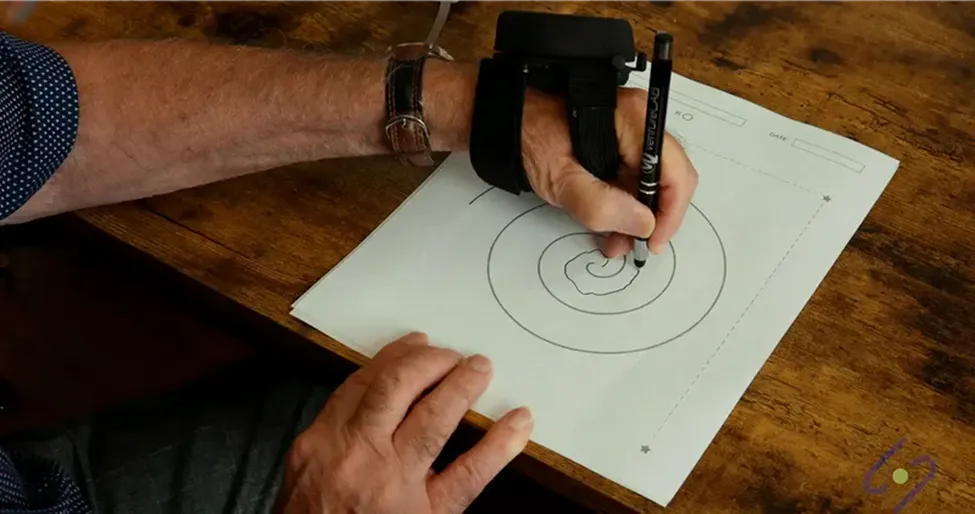
Assistive technology has become an important part of tremor management for people living with conditions such as Essential Tremor and Parkinson’s Disease. These technologies are designed to help individuals maintain control during daily activities that require steady hand movement.
While traditional treatments such as medications and therapy remain essential, modern assistive devices are increasingly being used alongside medical care to improve daily function.
This article explores how assistive technology works and how modern devices are helping people manage hand tremors more effectively.
What Is Assistive Technology for Tremors?
Assistive technology refers to tools or devices designed to help individuals perform tasks that may otherwise be difficult due to physical limitations.
For tremor management, assistive technology focuses on stabilizing hand movement during activities such as:
- Eating
- Writing
- Working on a computer
- Holding objects
- Personal care tasks
These technologies do not cure tremors but can help reduce their impact during specific tasks.
Adaptive Tools for Tremor Management
Some of the most commonly used assistive devices are adaptive tools designed to make everyday tasks easier.
Examples include:
Weighted utensils
These add resistance to movement and can help reduce tremor amplitude during meals.
Pen grips and weighted pens
Larger grips allow users to maintain better control when writing.
Stabilized cups or mugs
Heavier drinkware can help reduce spills caused by shaking.
Button hooks and dressing aids
These tools help individuals perform personal care tasks that require fine motor control.
Many occupational therapists recommend these devices as an initial step in tremor management.
Digital Technology Supporting Daily Activities
Technology has also introduced digital solutions that reduce the need for fine motor control.
Examples include:
- Voice recognition software for dictation
- Touchscreen devices with stylus input
- Adaptive computer mice and keyboards
These tools help people with tremors perform professional and personal tasks more easily.
Wearable Tremor Stabilization Devices
One of the most significant recent developments in tremor assistive technology is wearable stabilization devices.
These devices are worn on the hand or wrist and are designed to reduce tremor movement during everyday activities.
Unlike medications, wearable tremor devices typically act locally at the hand rather than affecting the entire body. This allows them to support specific tasks such as eating, writing, or holding objects.
Wearable technology is often used alongside other treatments as part of a comprehensive tremor management strategy.
Wrist Weights as a Simple Approach
A simple wearable option sometimes used for mild tremors is wrist weights.
By adding resistance to arm movement, wrist weights can help dampen tremor amplitude during certain tasks. They are inexpensive and easy to obtain, though they may cause fatigue if used for long periods.
Because wrist weights do not adapt to tremor patterns, they may be less effective for individuals with more pronounced tremors.
The Future of Tremor Assistive Technology
The field of assistive technology continues to evolve. Researchers and engineers are exploring new approaches that combine biomechanics, robotics, and wearable technology to improve tremor stabilization.
Future developments may include:
- More advanced wearable stabilizers
- Smart adaptive devices
- AI-supported assistive tools
These innovations may help provide even greater support for people living with tremors.
Steadiwear and Modern Anti-Tremor Technology
One example of a modern wearable tremor stabilization device is the Steadi-3 anti-tremor glove developed by Steadiwear. Our glove is designed to help stabilize hand movements during daily activities using magnetic vibration-absorber technology. This mechanism passively absorbs tremor energy and reduces shaking while allowing voluntary hand movements to continue normally.
Because the device does not rely on electronics, batteries, or charging, it can begin working immediately when worn. Its lightweight design allows it to be used during activities such as eating, writing, or working at a desk. Assistive technologies like our glove represent a growing category of tools aimed at improving daily independence for people living with tremors.
Conclusion
Assistive technology is becoming an increasingly important part of tremor management. From simple adaptive tools to advanced wearable stabilization devices, these technologies can help people maintain independence during everyday activities.
While assistive devices do not replace medical treatment, they provide valuable support that can improve quality of life and daily function.
Anyone experiencing persistent tremors should consult a healthcare professional to determine the underlying cause and discuss appropriate treatment and management options.
CLICK HERE TO REAM MORE INFORMATIVE ARTICLE : LITTLEMINAXO