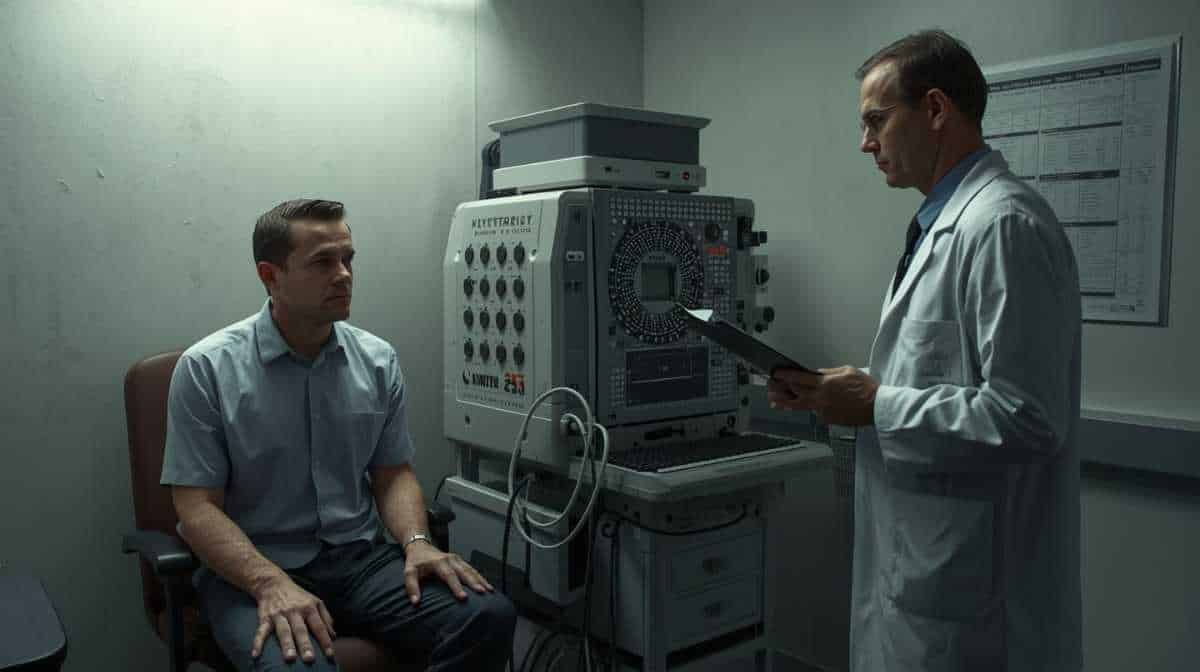
Most people have seen a polygraph test in action—usually in a crime show where the suspect starts sweating, the machine beeps wildly, and the truth magically appears on paper. It feels dramatic. Convincing, even.
But here’s the thing: real-life polygraph tests are a lot less cinematic—and a lot more complicated.
At its core, a polygraph doesn’t actually detect lies. It measures physical reactions. That gap between what people think it does and what it actually does is where things get interesting.
Let’s unpack it properly.
What a Polygraph Test Really Does
A polygraph machine records several physiological signals at once. Typically, it tracks heart rate, blood pressure, breathing patterns, and skin conductivity (basically, how much you’re sweating).
The idea is simple on paper. When people lie, they get nervous. That nervousness causes measurable physical changes. The machine picks those up.
But here’s where things start to wobble.
Not everyone reacts to lying in the same way. Some people get anxious telling the truth. Others stay calm while lying. Think about someone who’s naturally nervous in high-pressure situations—they might “fail” even if they’re being completely honest.
Picture this: you’re sitting in a small room, hooked up to sensors, being asked serious questions by a trained examiner. Even if you’ve done nothing wrong, your body might still go into stress mode. That alone can skew the results.
So the polygraph isn’t reading your mind. It’s reading your body—and your body doesn’t always tell a clean, simple story.
How the Test Is Actually Conducted
The process isn’t just “hook someone up and start asking questions.” It’s more structured than that.
First comes the pre-test interview. This part can be surprisingly long. The examiner talks with you, explains the process, and goes over the questions that will be asked. Nothing is supposed to come as a surprise during the actual test.
Then comes the testing phase. You’ll be asked a mix of questions:
- Relevant questions (about the issue being investigated)
- Control questions (designed to provoke a reaction)
- Neutral questions (basic, non-threatening ones)
The examiner compares your physiological responses across these different types of questions. The theory is that deceptive answers will produce stronger reactions than the control ones.
After that, there’s an analysis phase where the examiner interprets the data.
Notice something important here? Interpretation plays a big role. This isn’t like a thermometer giving you a clear number. There’s judgment involved. And judgment can vary.
Why People Still Trust It
Despite all the criticism, polygraph tests haven’t disappeared. In fact, they’re still used in certain areas—law enforcement screenings, government agencies, and sometimes private investigations.
Why?
Partly because they can be useful as a psychological tool.
Let’s be honest: sitting in front of a machine that’s supposedly detecting lies can make people nervous enough to confess. It’s not the machine doing the work—it’s the pressure.
There are documented cases where suspects admitted to things during or after a polygraph test. Not because the machine caught them, but because they believed it would.
It’s a bit like putting someone under a bright spotlight. The environment itself pushes people to crack.
That doesn’t mean it’s reliable in a scientific sense—but it can still be effective in certain situations.
The Accuracy Question
This is where things get messy.
Ask ten experts about polygraph accuracy, and you’ll get a range of answers. Some claim it’s highly reliable when conducted properly. Others argue it’s barely better than guessing.
The truth sits somewhere in the middle.
Studies suggest accuracy rates can vary widely—sometimes around 70–90% under controlled conditions. But real-world conditions are rarely controlled.
And even a small error rate becomes a big deal when the stakes are high.
Imagine being wrongly labeled deceptive in a criminal investigation or failing a pre-employment screening for a government job. That’s not a minor inconvenience. That can change the course of someone’s life.
Because of this, polygraph results are often not admissible in court in many places. The legal system tends to treat them cautiously.
That alone tells you something.
Can People Beat a Polygraph?
Short answer: sometimes, yes.
Long answer: it’s complicated.
There are known techniques people have tried to use—controlling breathing, inducing pain during certain questions, or mentally distracting themselves to manipulate physiological responses.
Some of these methods have shown limited success in studies. But they’re not foolproof. Skilled examiners are trained to look for signs of countermeasures.
Still, the very fact that “beating the test” is even a conversation weakens confidence in the tool.
And there’s another angle that doesn’t get talked about enough: people who don’t try to beat the test can still fail it.
A nervous personality, fear of authority, or even just the pressure of the situation can produce reactions that look deceptive.
So you end up with a strange situation where:
- A calm liar might pass
- An anxious truth-teller might fail
Not exactly the clean result people expect.
Where Polygraphs Show Up Today
You’ll still find polygraph tests used in a few key areas.
Law enforcement agencies sometimes use them during investigations—not as definitive proof, but as one piece of the puzzle.
Certain government jobs, especially in intelligence and security, may require polygraph screenings as part of the hiring process.
There are also private uses. Some people take polygraph tests to resolve personal disputes—say, in cases of suspected infidelity. It sounds extreme, but it happens.
Here’s a quick scenario.
A couple is dealing with trust issues. One partner insists they’ve been faithful. The other doesn’t believe them. Eventually, someone suggests a polygraph test.
Even if the result isn’t scientifically perfect, the act of taking the test can shift the dynamic. It becomes less about the machine and more about willingness to submit to scrutiny.
Again, psychology is doing a lot of the heavy lifting.
The Human Factor Behind the Machine
One of the biggest overlooked aspects of polygraph testing is the examiner.
Their skill, experience, and approach matter—a lot.
A good examiner knows how to establish a baseline, how to phrase questions carefully, and how to interpret patterns rather than isolated spikes in data.
A less experienced examiner might misread those signals.
There’s also the interpersonal side. The way questions are asked, the tone of the room, even subtle cues can influence how a person reacts.
It’s not just a machine doing objective measurement. It’s a human-guided process.
And whenever humans are deeply involved, variability comes with the territory.
Why the Debate Won’t Go Away
Polygraphs sit in a strange space between science and psychology.
They’re not entirely baseless—there is measurable data involved. But they’re not precise enough to be considered fully reliable either.
That tension keeps the debate alive.
Some people see them as useful tools when used carefully and alongside other evidence. Others see them as outdated and potentially misleading.
Both sides have valid points.
Here’s the thing: people want a clear way to detect lies. It’s an appealing idea. A machine that cuts through deception and delivers truth.
But human behavior isn’t that simple. Emotions, stress, personality traits—they all blur the signals.
And no machine has fully solved that problem yet.
What to Keep in Mind If You Ever Take One
If you ever find yourself scheduled for a polygraph test, it helps to understand what you’re walking into.
First, it’s normal to feel nervous. That alone doesn’t mean anything.
Second, the questions shouldn’t surprise you. You’ll typically review them beforehand.
Third, your overall pattern of responses matters more than any single spike.
And finally—this might be the most important—don’t treat the machine like an all-knowing judge. It isn’t.
It’s a tool. A somewhat imperfect one.
The Takeaway
Polygraph tests live in that gray area where science, psychology, and human expectation collide.
They measure real physical signals, but those signals don’t map neatly onto truth and lies. People are too complex for that.
Still, the test persists. Not because it’s flawless, but because it taps into something powerful—the pressure of being evaluated, the fear of being caught, the hope of being believed.
So if you’ve ever wondered whether a polygraph can truly detect lies, the honest answer is: not exactly.
It detects reactions. What those reactions mean—that’s still up for interpretation.