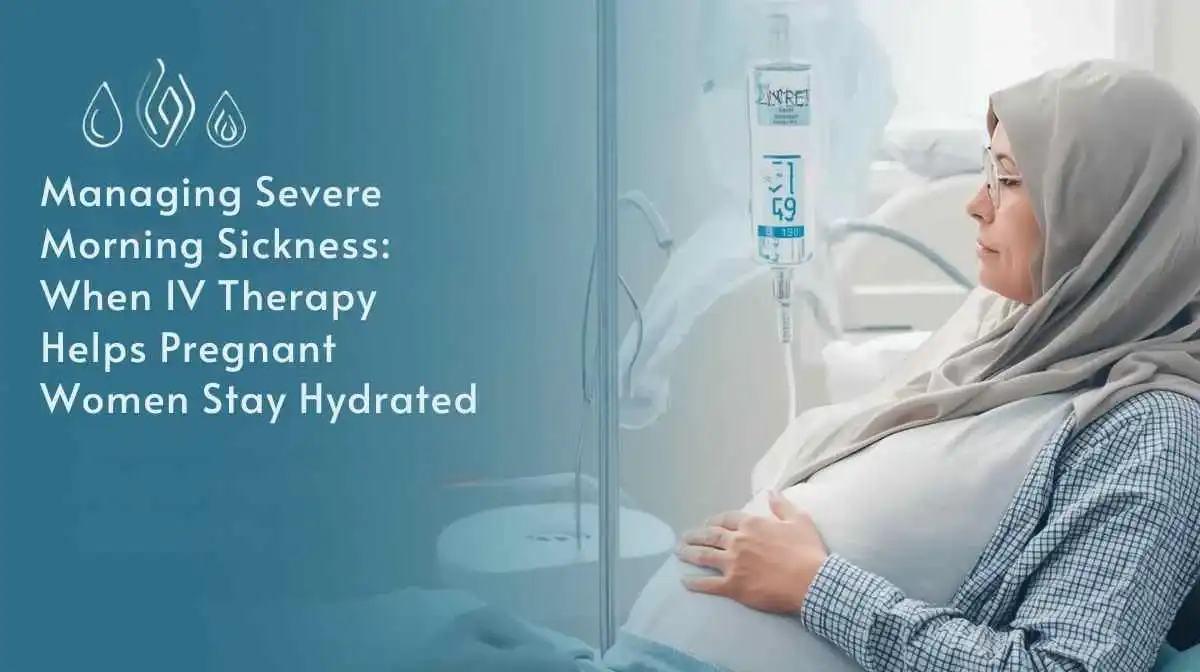
Pregnancy should be a time of anticipation and joy, but for many women, severe nausea and vomiting make the first trimester—and sometimes longer—a period of genuine suffering.
While mild morning sickness affects most pregnancies, hyperemesis gravidarum (severe pregnancy nausea) affects 1-3% of pregnant women with debilitating symptoms that can lead to dangerous dehydration and nutritional deficits.
Understanding when mobile IV therapy provides safe, effective relief helps pregnant women and their healthcare providers make informed decisions about managing severe symptoms.
Understanding Morning Sickness vs. Hyperemesis Gravidarum
Typical Morning Sickness:
- Nausea with occasional vomiting
- Usually confined to first trimester
- Manageable with dietary changes, rest, and sometimes anti-nausea medication
- Uncomfortable but not medically dangerous
Hyperemesis Gravidarum (HG):
- Severe, persistent nausea and vomiting
- Weight loss exceeding 5% of pre-pregnancy body weight
- Dehydration requiring medical intervention
- Inability to keep down food or fluids
- Can persist throughout entire pregnancy
- Creates genuine health risks for mother and baby
The distinction matters because treatment approaches differ significantly. Mild morning sickness responds to home management strategies, while HG often requires medical intervention to prevent serious complications from dehydration and malnutrition.
The Dehydration Problem in Severe Pregnancy Nausea
When persistent vomiting prevents keeping down adequate fluids, dehydration develops rapidly. Pregnancy itself increases fluid needs—you need roughly 50-100% more fluids than pre-pregnancy to support increased blood volume, amniotic fluid production, and fetal circulation. When you cannot meet even basic fluid needs, deficits accumulate quickly.
Signs of Pregnancy Dehydration:
- Dark yellow or amber urine (or very infrequent urination)
- Dizziness, especially when standing
- Rapid heartbeat at rest
- Dry mouth and lips
- Decreased skin elasticity
- Severe fatigue beyond typical pregnancy tiredness
- Headaches
- Confusion or difficulty concentrating
Dehydration during pregnancy creates risks beyond maternal discomfort. Adequate hydration is essential for maintaining amniotic fluid levels, supporting placental blood flow, preventing preterm labor triggers, and supporting fetal development. Severe dehydration can compromise all these functions.
Why Traditional Management Sometimes Fails
Standard approaches to morning sickness include small frequent meals, avoiding trigger foods and smells, ginger or vitamin B6 supplementation, adequate rest, and prescription anti-nausea medications when needed. These strategies help many women manage symptoms adequately.
But for women with hyperemesis or severe morning sickness, these approaches often prove insufficient. When you vomit anything you consume—including water and anti-nausea medications—oral management becomes impossible. The nausea prevents taking the very medications that might reduce nausea, creating a frustrating cycle.
Many women with HG end up making repeated ER visits for IV hydration, each requiring travel while feeling terrible, long waits, and significant expense. This reactive approach provides temporary relief but doesn’t prevent the cycle from repeating every few days throughout pregnancy.
How Mobile IV Therapy Provides Relief
For pregnant women experiencing severe dehydration from persistent vomiting, IV therapy offers several crucial benefits.
Immediate Rehydration Without Oral Intake One liter of normal saline or lactated Ringer’s solution delivers complete hydration regardless of your ability to keep anything down. This rapid restoration typically provides relief within 30-45 minutes—energy returning, dizziness improving, headaches easing.
Breaking the Nausea Cycle Anti-nausea medications administered IV (ondansetron/Zofran, metoclopramide/Reglan, or promethazine/Phenergan) take effect immediately without needing to be absorbed through your stomach. This breaks the cycle where you can’t keep down the very medications that might help you keep things down.
Pregnancy-Safe IV Formulations Mobile IV therapy in Colorado uses pregnancy-appropriate formulations approved by OB-GYN medical directors:
- Base Hydration (1000ml): Normal saline or lactated Ringer’s for complete fluid restoration
- B6 (Pyridoxine): Often 25-100mg, shown to reduce pregnancy nausea
- B12 (Methylcobalamin): Supports energy and may help with nausea
- Vitamin C: Pregnancy-safe doses (500-1000mg) for immune support
- Magnesium Sulfate: Pregnancy-safe doses helping with cramping and headaches
Medications Avoided or Used Cautiously: Reputable providers working with pregnant women avoid supplements without clear safety data, high-dose formulations inappropriate for pregnancy, and any substances with pregnancy category concerns. Transparency about all components ensures informed consent.
The Home Treatment Advantage
For pregnant women feeling miserable with severe nausea, the prospect of traveling to a clinic or ER while vomiting creates additional stress and discomfort. Mobile IV services eliminate this barrier by bringing treatment to you.
Treatment Process: A licensed RN arrives at your home within 1-2 hours of booking. After reviewing your prenatal care information and current symptoms, treatment begins in the comfort of your home—no travel, no waiting rooms, no exposure to other illnesses during a period when your immune system is already stressed.
Many women in Lakewood and Denver metro areas use mobile IV therapy for regular management of severe morning sickness, scheduling sessions 1-2 times weekly during their worst weeks rather than waiting until dehydration becomes severe enough to require ER visits.
Timeline for Relief:
- Within 15-20 minutes: Noticeable improvement in nausea and energy
- 30-45 minutes: Ability to sip fluids returns
- 1-2 hours: Feeling substantially better, able to eat light foods
- Next 24-48 hours: Improved symptom management if combined with oral anti-nausea medication
Medical Safety and OB Coordination
Using IV therapy during pregnancy requires appropriate medical oversight and coordination with prenatal care providers.
Essential Safety Measures:
- Clear communication with your OB-GYN about IV therapy use
- Licensed medical professionals administering treatments
- Pregnancy-safe formulations with OB approval
- Proper screening for pregnancy complications requiring different intervention
- Documentation shared with prenatal care providers
When to Seek ER Care Instead: Certain situations require hospital-level care rather than home IV therapy:
- Suspected ectopic pregnancy or miscarriage
- Severe abdominal pain beyond typical cramping
- Vaginal bleeding
- Inability to keep down fluids for 24+ hours with signs of severe dehydration
- Fever above 100.4°F
- Concerning fetal movement changes (in later pregnancy)
- Any symptoms your OB wants evaluated urgently
Reputable mobile IV services maintain communication protocols with patients’ OB-GYNs, ensuring collaborative care rather than operating independently of prenatal medical management.
Cost and Insurance Considerations
Mobile IV therapy for pregnancy-related dehydration typically costs $150-300 per session. While not insignificant, especially for women requiring weekly or biweekly treatments, consider the alternatives:
Without Home IV Treatment:
- Multiple ER visits at $500-2000+ each
- Lost work time from severe symptoms
- Potential hospitalization for severe HG ($5,000-15,000+)
- Reduced quality of life during what should be a special time
With Regular IV Management:
- Preventive treatment before severe dehydration develops
- Ability to maintain work and activities more normally
- Avoiding ER visits and potential hospitalization
- Substantially better pregnancy experience
Some insurance plans cover IV therapy for hyperemesis when prescribed by physicians as medical necessity. Many pregnant women use HSA/FSA funds for treatments. Working with providers who provide superbills for insurance submission helps maximize potential reimbursement.
Integration with Comprehensive HG Management
IV therapy works best as part of broader hyperemesis management coordinated with your OB-GYN:
Medical Management:
- Regular prenatal checkups monitoring weight, hydration, fetal growth
- Prescription anti-nausea medications (oral, suppository, or patches)
- Vitamin supplementation when tolerated
- Monitoring for concerning complications
Lifestyle Adaptations:
- Identifying and avoiding trigger foods and smells
- Eating small amounts frequently rather than large meals
- Staying in cool, well-ventilated spaces
- Getting adequate rest
- Accepting help with household tasks during worst periods
Mental Health Support: Severe pregnancy nausea creates genuine psychological stress. Feelings of depression, anxiety about fetal health, frustration with inability to function normally, and isolation from reduced social activity all commonly affect women with HG. Mental health support from counselors familiar with pregnancy challenges helps manage these aspects.
The Partner and Family Role
Severe pregnancy nausea affects not just the pregnant woman but partners and families. Understanding the genuine medical nature of HG—not “just” morning sickness—helps partners provide appropriate support:
Practical Support:
- Taking over household tasks and childcare for other children
- Managing food preparation away from areas where the pregnant woman spends time
- Coordinating medical appointments and IV therapy scheduling
- Understanding that recovery takes time, not pressure to “just feel better”
- Recognizing when symptoms warrant medical intervention
Long-Term Considerations
For many women, hyperemesis improves after the first trimester, though some experience symptoms throughout pregnancy. Understanding that this is temporary—however long “temporary” feels during the worst weeks—helps maintain perspective.
Some women who’ve experienced severe HG hesitate about future pregnancies, fearing repeat experiences.
While HG does recur in subsequent pregnancies about 80% of the time, knowing effective management strategies exist—including mobile IV therapy—makes the prospect less daunting. Many women successfully manage second pregnancies with proactive IV therapy use based on their first pregnancy experience.
Evidence and Medical Consensus
Medical literature supports IV hydration for hyperemesis gravidarum as standard treatment. Studies show that addressing dehydration improves maternal comfort and fetal outcomes, prevents progression to severe complications requiring hospitalization, and allows many women to maintain some level of normal function during pregnancy.
Understanding modern approaches to pregnancy wellness helps contextualize IV therapy within broader supportive care strategies. While research on home-based mobile IV therapy specifically is still emerging, the core intervention—IV hydration and anti-nausea medication for pregnancy-related vomiting—represents well-established medical practice.
Making Informed Decisions
Mobile IV therapy for pregnancy-related dehydration makes most sense when:
Appropriate Situations:
- Diagnosed hyperemesis or severe morning sickness
- Inability to keep down adequate fluids despite trying
- Signs of dehydration developing
- Previous ER visits for pregnancy-related dehydration
- Desire to avoid repeated ER visits through preventive home treatment
- OB-GYN approval of treatment approach
When Other Approaches Suffice:
- Mild nausea manageable with dietary changes
- Ability to maintain adequate hydration through oral intake
- Success with prescription anti-nausea medications
- First trimester nausea showing signs of improving
The decision should involve your OB-GYN, who understands your specific pregnancy situation and can determine whether home IV therapy represents appropriate care versus situations requiring more intensive medical monitoring.
For women suffering through severe pregnancy nausea, understanding that mobile IV therapy provides safe, effective relief helps reclaim some quality of life during a challenging pregnancy period. While it cannot eliminate hyperemesis, it can make the difference between barely surviving each day and maintaining some normalcy during the weeks or months until symptoms improve.
Pregnancy is difficult enough without preventable suffering from severe dehydration—when medical interventions exist that can help, using them isn’t weakness; it’s wise management of a genuine medical condition affecting both maternal and fetal health.