
When we think of NFL players and their paychecks, we often picture the huge contracts and massive salaries of top-tier athletes. Big-name quarterbacks, star wide receivers, and dominant defensive players can sign contracts worth tens of millions of dollars.
But when it comes to rookies, especially those drafted later in the rounds, the story is much different. Rookies face a different pay structure, and it’s important to understand the minimum salaries, how contracts are structured, and what financial opportunities or challenges these newcomers encounter.
In this detailed guide, we’ll explore the salary landscape for NFL rookies. We’ll look at how their pay is determined, compare rookie contracts with those in other major sports leagues, and break down the realities that rookies face in terms of money, bonuses, and long-term financial planning.
By the end, you’ll have a clearer picture of how much NFL rookies truly earn and the journey they face in their first few years of professional football.
How NFL Rookie Salaries Are Structured
Rookie contracts in the NFL are governed by the rookie wage scale, which was implemented in the 2011 collective bargaining agreement (CBA) between the NFL and the NFL Players Association (NFLPA).
This wage scale was designed to provide more control to the teams and ensure that rookie players do not receive overinflated contracts based solely on their draft position.
The rookie wage scale ties a player’s compensation to their draft position and the year of service in the league.
While rookies are guaranteed a certain amount based on their draft selection, it’s essential to understand the total value of a contract and how bonuses play a crucial role in a rookie’s earnings.
2026 NFL Rookie Salary Breakdown
In the 2025 NFL season, the salary structure for rookies is as follows:
- Rookie (0 years of experience): A rookie will earn a minimum of $840,000 in the 2025 season.
- 1 Year of Experience: Players with one year of experience will earn $960,000.
- 2 Years of Experience: A player with two years of experience will earn $1.03 million.
- 3 Years of Experience: Players with three years of experience will earn $1.1 million.
- 4-6 Years of Experience: For players with four to six years of experience, the salary increases to $1.17 million.
- 7+ Years of Experience: Veteran players, with seven or more years of experience, earn a minimum salary of $1.255 million.
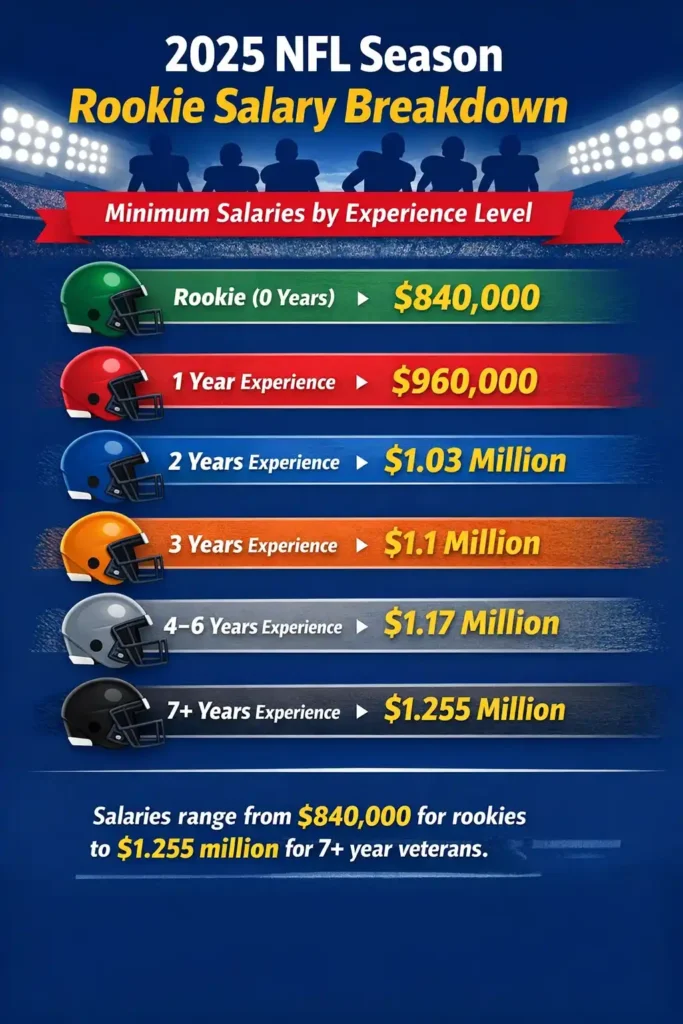
These figures represent the minimum guaranteed salary for a player on the 53-man roster, but it’s important to note that some players, especially those selected in the early rounds of the draft, can earn much more.
Rookie contracts vary based on their draft pick, and while the wage scale provides a baseline, there are significant opportunities for earnings through signing bonuses, performance incentives, and roster bonuses.
Minimum Salary Versus Actual Earnings
While rookies are guaranteed a minimum salary, many players can earn significantly more than the minimum salary based on the terms of their contracts.
For example, a first-round draft pick can earn millions over the course of their rookie contract. However, late-round or undrafted rookies often sign contracts worth much less.
Let’s break it down further with an example:
- First-Round Pick: A top pick, like the first overall selection, can sign a contract worth upwards of $35 million over four years. This includes a substantial signing bonus and guaranteed money.
- Late-Round Pick: A player chosen in the later rounds of the draft may earn a rookie contract worth around $2-3 million over the same period, with less guaranteed money.
Understanding the Rookie Wage Scale
The rookie wage scale limits how much teams can pay rookies based on their draft position. The higher the pick, the higher the compensation. Here’s how it typically works for first-round draft picks:
| Draft Position | Total Contract Value (Approx.) | Signing Bonus (Approx.) |
| 1st Overall | $35-40 million | $20 million |
| 10th Overall | $20-25 million | $12 million |
| 20th Overall | $15-20 million | $8 million |
| 50th Overall | $5-6 million | $2.5 million |
This scale ensures that rookies entering the NFL are compensated in a way that is aligned with their draft position but prevents any one player from commanding excessive amounts of money before proving their value on the field.
How Much Do New Players Really Make?
New NFL players, particularly rookies, earn a minimum salary based on their draft position and experience. For the 2025 season, rookie salaries start at $840,000, with higher earnings for first-round picks.
Bonuses, performance incentives, and practice squad pay can increase earnings, but financial management is key for long-term success.
What About the Practice Squad?
Not all rookies make it to the active roster. Many are placed on the practice squad, where they still train with the team and are available for promotion to the active roster, but they aren’t eligible to play on game days unless called up.
- Practice Squad Pay: For 2025, practice squad players earn a weekly salary of $12,500. Over the course of an 18-week season, this totals $225,000 before taxes.
Although this is a far cry from the millions that some NFL stars earn, it’s still a significant amount for players who are working hard to earn their spot. A rookie who is promoted to the active roster can earn $44,166 per week—a major jump from practice squad pay.
Practice Squad vs. Active Roster
There’s a stark difference between earning practice squad pay and being moved up to the active roster:
- Practice Squad Pay (Weekly): $12,500
- Active Roster Pay (Weekly): $44,166
This difference shows the financial incentive for practice squad players to work hard and prove themselves in hopes of securing a spot on the active roster. A promotion not only increases their chances of playing in games but also significantly boosts their weekly pay.
Bonuses and Other Forms of Compensation
In addition to their base salary, rookies may earn money through signing bonuses, performance bonuses, and roster bonuses.
- Signing Bonuses: Rookies typically receive a signing bonus as part of their contract. The amount can vary widely, but first-round picks can often receive bonuses worth millions of dollars, which are paid upfront.
- Performance Bonuses: Performance-based bonuses are additional pay that players can earn by meeting specific milestones, such as scoring a certain number of touchdowns or achieving certain stats. These bonuses are often written into contracts as a way to incentivize players to perform at a high level.
- Roster Bonuses: Rookies may also earn bonuses simply for making the roster at the start of the season. These bonuses can be an important source of income for players on the lower end of the salary scale.
Comparing NFL Rookie Salaries to Other Sports Leagues
The rookie pay scale in the NFL is unique compared to other major professional sports leagues, such as the NBA, MLB, and NHL. Let’s compare rookie salaries in these leagues:
- NBA (National Basketball Association): NBA rookies earn significantly more than NFL rookies. In 2025, the minimum salary for a first-round NBA pick is around $5 million for the first two years, with potential for more based on performance and contract terms.
- MLB (Major League Baseball): MLB rookies earn a minimum salary of $720,000. MLB contracts for rookies can also be longer than NFL contracts and have more potential for earning over time.
- NHL (National Hockey League): NHL rookies earn a minimum salary of $750,000, which is higher than the NFL’s minimum but still lower than the NBA and MLB rookies.
While NFL rookie pay is competitive, it’s clear that rookies in the NBA and MLB have the potential to earn more right off the bat due to different salary structures and contract lengths.
Financial Challenges for NFL Rookies
Despite the relatively high salaries compared to many other industries, many NFL rookies face financial challenges during the first few years of their careers. These challenges include:
- Cost of Living: Many NFL teams are based in high-cost cities like Los Angeles, New York, and Miami, where living expenses can quickly eat up a rookie’s earnings.
- Agent Fees: Rookies must also deal with agent fees, which typically range between 3-5% of their total earnings.
- Uncertainty: Since NFL careers are relatively short—3.3 years on average—many rookies must plan for their financial future while still in the early stages of their careers.
A significant number of rookies face financial difficulties after they retire, as the average NFL career is much shorter than those in other professions.
Do NFL Rookies Have Long-Term Financial Security?
While the rookie wage scale provides financial stability in the short term, many rookies must carefully manage their earnings to ensure long-term financial security. Rookies who earn larger signing bonuses may have an advantage, as these bonuses provide guaranteed money.
However, for players who earn closer to the minimum salary, it’s crucial to budget wisely and plan for the future, as the risk of injury and the relatively short length of NFL careers leave many former players facing financial difficulties after retirement.
Conclusion
NFL rookie salaries are governed by a structured wage scale that ensures fair compensation based on draft position and experience. While rookies earn a minimum salary that varies depending on their draft position, their total earnings can be significantly higher due to signing bonuses, performance incentives, and other forms of compensation.
The financial opportunities for rookies depend heavily on their draft position, the team they are drafted by, and their ability to perform on the field. However, despite the relative wealth of some NFL rookies, many face challenges in managing their earnings due to high living expenses, agent fees, and the uncertainty of the NFL career lifespan.
By understanding how rookie contracts work and the salary structure in the NFL, fans, players, and future draftees can gain a clearer picture of the financial realities rookies face in one of the world’s most lucrative sports leagues.