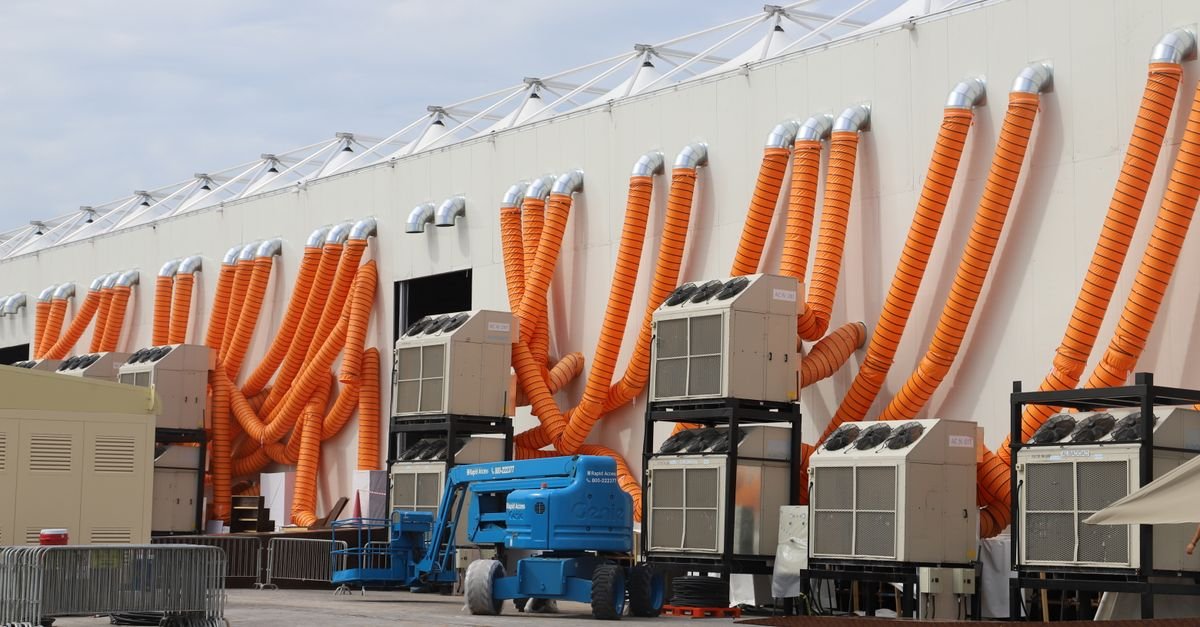
Industrial fluid chillers protect production equipment by removing heat from process water or other circulating fluids. If a chiller can no longer maintain the process temperature under normal load, production quality, electricity costs and equipment reliability can all suffer. Before buying a replacement, identify whether the problem is capacity, maintenance, controls or an unexpected change in process demand.
Quick answer: Five warning signs are rising fluid temperatures, repeated unplanned shutdowns, unexpectedly high power consumption, insufficient capacity after expansion, and increasingly expensive repairs. Record actual supply and return temperatures, flow rates and alarm history before making a decision; some faults can be corrected without buying an entirely new system.
1. The Chiller Cannot Hold the Required Fluid Temperature
Compare the operator’s target supply temperature with the actual supply and return readings during normal and peak production. An occasional fluctuation is different from a recurring inability to reach setpoint. Reduced heat-exchanger performance, a fouled strainer, low coolant flow or an undersized chiller may produce similar symptoms, so the temperature readings alone do not identify the faulty component.
Ask a service technician to check coolant condition, pump output, filter pressure drop, condenser cleanliness and operating conditions. Avoid changing refrigeration settings or bypassing safety controls without the manufacturer’s procedure. A useful service report records the process load and ambient temperature alongside the measured performance.
2. Unplanned Downtime Is Becoming Routine
High-pressure faults, low-flow alarms, freeze-protection trips and repeated compressor cycling can interrupt production. If the same alarm returns after a reset, treat it as a diagnostic clue rather than an inconvenience. Repeated resets without an investigation can make a minor fault more expensive and may increase safety risks.
Create a downtime log showing the time, line affected, error code, environmental conditions and action taken. A chiller that stops after a shift change may have a different underlying issue from one that struggles only during the hottest hours of the day. The pattern helps a technician separate controls, pump, ventilation and capacity issues.
3. Energy Consumption Is Rising Without More Production
A growing electricity bill does not by itself prove that the chiller is inefficient: tariffs, longer shifts and hotter weather can change costs. Compare kilowatt-hours per unit of product or per operating hour under similar conditions. Check whether fans and pumps run unnecessarily, whether the condenser is dirty and whether operators have set the fluid temperature lower than the process requires.
A properly sized replacement with suitable part-load controls may reduce energy use, but calculate savings against purchase, installation, maintenance and expected service life. Ask suppliers for performance data at your actual fluid temperatures and local summer conditions instead of comparing headline capacity figures.
4. Your Process Load Has Grown Beyond the Original Design
Additional machines, longer operating shifts or hotter raw materials can push an older chiller beyond its design capacity. Discuss both average and peak heat loads with the equipment manufacturer. The correct capacity depends on flow rate, fluid type, temperature difference, operating hours and safety allowances. Bigger is not always better: oversizing can create inefficient cycling and control problems.
If demand rises temporarily, hiring a suitable unit can provide breathing room while the permanent solution is specified. For example, industrial chiller hire options can be compared against a repair or capital purchase, with installation and commissioning costs included.
5. Repairs Are Frequent, Costly or Increasingly Difficult
A single repair does not mean a chiller has reached the end of its life. The concern is a trend: repeated compressor faults, scarce replacement parts, coolant leaks, corrosion or repeated labour costs that make the machine uneconomical to operate. Compare the documented cost of likely future repairs with a replacement quote rather than making a decision based solely on age.
When a system is still serviceable, planned maintenance, water treatment, airflow improvements and control calibration may extend its life. Where major components are failing together, a replacement assessment should include downtime risk, warranty, spare parts availability and the effect on neighbouring equipment.
What to Ask Before Choosing a New Fluid Chiller
Request a written heat-load assessment, supply and return temperature range, fluid compatibility, pump head and flow requirements, expected performance at high ambient temperature, electrical supply requirements, noise level, access for maintenance and the proposed service schedule. Clarify whether the quote includes transport, pipework, commissioning, refrigerant handling, controls integration and staff training.
For specialist help, a provider such as Fluid Chiller Services can be asked to assess whether repair, hire or replacement is suitable. Seek a site-specific written recommendation rather than assuming a new chiller is always the right answer.
Final Takeaway
The best time to assess an industrial chiller is before it causes an extended shutdown. Temperature drift, recurring alarms, changing energy use, new production loads and growing repair bills all warrant investigation. Start with measured operating data, obtain an independent capacity assessment where practical, and compare the full lifecycle cost of repair and replacement. Refrigeration and electrical repairs should be handled by qualified personnel. Facility managers budgeting for new cooling equipment may also review our HVAC estimating guide for related mechanical planning and takeoff considerations.