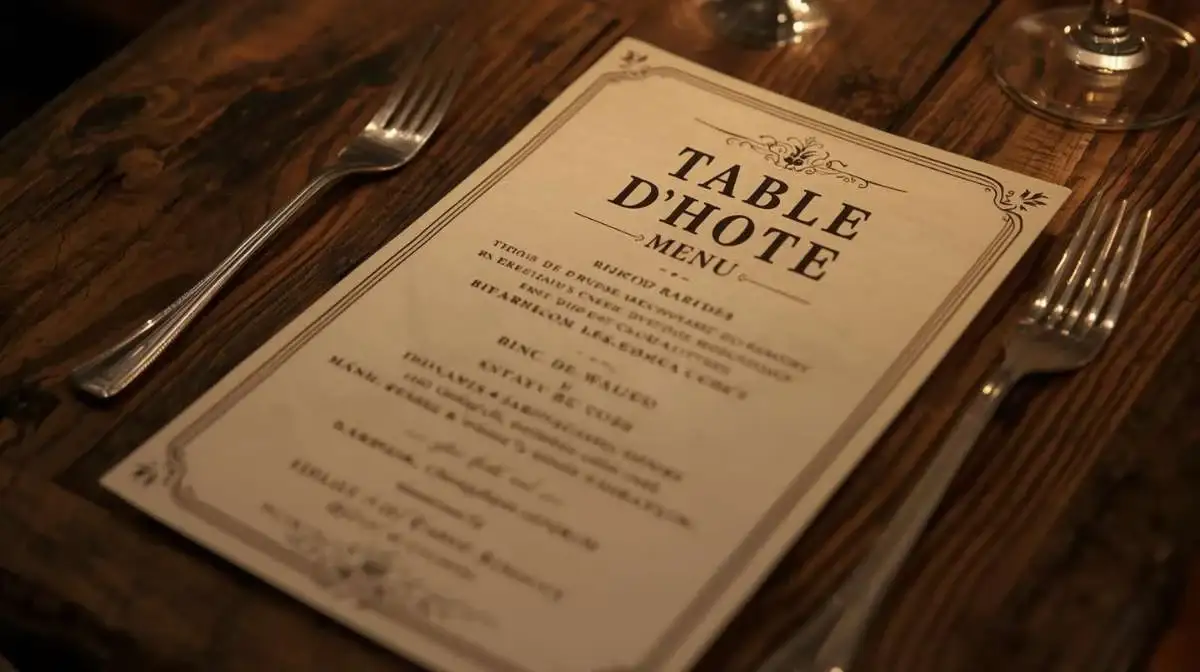
Dining today is not only about eating food. People also look for comfort, atmosphere, and memorable experiences when they visit restaurants. A well-designed menu helps create that experience and shapes how customers enjoy their meal.
One popular menu style used around the world is the Table d’Hote menu. It offers a full meal at a fixed price and includes several courses. This format allows restaurants to guide diners through a carefully planned culinary journey.
Many restaurants, hotels, and event venues use this menu style because it benefits both guests and businesses. It simplifies ordering, improves kitchen efficiency, and provides a balanced dining experience from start to finish.
What is a Table d’Hote Menu
A Table d’Hote menu is a fixed-price menu that includes multiple courses served together as a complete meal. The term comes from French and literally means “the host’s table.”
In the past, guests would sit together at the host’s table and eat the same meal prepared for everyone. Today, restaurants use this concept to offer a pre-planned multi-course meal designed by the chef.
The menu usually includes several courses that build a complete dining experience. Each course is carefully selected to complement the others and create a smooth progression of flavors.
Common courses include:
- Appetizer or starter
- Soup or salad
- Main course
- Dessert
Some restaurants also include bread, beverages, or side dishes as part of the fixed price.
How a Table d’Hote Menu Works
In most restaurants, the Table d’Hote menu provides limited choices for each course. Diners may choose from two or three options while still paying the same fixed price.
For example, the menu might offer two appetizers, three main dishes, and two dessert choices. This structure gives guests some flexibility while keeping the menu simple and organized.
Restaurants often introduce Table d’Hote menus during special occasions or themed dining events. This helps them provide a consistent experience for all guests.
Common situations where this menu style is used include:
- Holiday dinners
- Wedding receptions
- Corporate events
- Chef tasting menus
- Seasonal restaurant promotions
Because the dishes are planned in advance, the kitchen can prepare more efficiently and serve customers faster.
Why the Table d’Hote Menu is Popular
The Table d’Hote menu remains popular because it offers a balanced combination of simplicity and elegance. Diners enjoy a carefully planned meal without the stress of choosing from dozens of options.
Chefs also appreciate this format because it allows them to design a full dining experience rather than focusing on individual dishes. Each course works together to create a complete culinary story.
Restaurants benefit as well because the fixed menu simplifies operations and helps control costs. This balance makes the Table d’Hote menu valuable for both customers and restaurant owners.
Key Benefits of a Table d’Hote Menu for Diners
Predictable Pricing
One of the biggest benefits of a Table d’Hote menu is clear and predictable pricing. Diners know the total cost of the meal before placing their order.
This removes uncertainty and allows people to enjoy the dining experience without worrying about the final bill. Guests can relax and focus on the meal instead of calculating costs.
In many restaurants, the fixed price can also provide better value compared with ordering each course separately.
Balanced Multi-Course Experience
A Table d’Hote menu creates a structured dining journey. Each course is designed to prepare the palate for the next dish.
For example, a light starter opens the appetite and introduces fresh flavors. The main course delivers rich taste and satisfying portions. Finally, dessert provides a sweet ending to the meal.
This natural flow of courses creates a complete and enjoyable dining experience.
Less Stress When Choosing Food
Large menus can sometimes overwhelm diners with too many options. Reading through dozens of dishes can take time and make decisions difficult.
The Table d’Hote menu solves this problem by offering a small selection of carefully chosen dishes. Guests can quickly pick from a few options and begin enjoying their meal.
This allows diners to focus more on conversation, relaxation, and the atmosphere of the restaurant.
Better Value for Money
Many people choose Table d’Hote menus because they offer excellent value. When each course is ordered separately from an à la carte menu, the total price can increase quickly.
A fixed-price menu often provides a full meal at a lower combined cost. This makes fine dining more accessible to guests who want a complete experience.
Customers feel satisfied knowing they are receiving multiple courses for a fair and predictable price.
Opportunity to Explore New Flavors
Another benefit of this menu style is the opportunity to try new dishes. Because the chef designs the menu, diners are introduced to flavors they might not normally choose.
This can include seasonal ingredients, creative recipes, or unique cooking techniques. Guests often discover new favorite dishes through this curated dining experience.
Trying unfamiliar flavors can make the meal more exciting and memorable.
Perfect for Special Occasions
Table d’Hote menus are ideal for events where many guests need to be served efficiently. The fixed menu ensures everyone receives a similar dining experience.
Events that commonly use this format include:
- Weddings
- Birthday celebrations
- Anniversaries
- Corporate dinners
- Holiday parties
Because the price and courses are planned in advance, event organizers can manage their budgets easily.
Benefits of a Table d’Hote Menu for Restaurants
Faster Kitchen Operations
A fixed menu helps the kitchen operate more smoothly. Chefs know exactly which dishes will be prepared during service.
This allows them to prepare ingredients earlier and organize cooking tasks efficiently. The kitchen staff can focus on quality instead of managing dozens of different orders.
Faster preparation leads to quicker service and happier customers.
Better Food Cost Management
Food cost is one of the largest expenses in the restaurant industry. With a Table d’Hote menu, chefs can estimate ingredient needs more accurately.
This helps restaurants control portion sizes and avoid unnecessary spending. Careful planning ensures the restaurant maintains healthy profit margins.
By knowing the expected menu items, restaurants can also buy ingredients in bulk and reduce costs.
Reduced Food Waste
When restaurants know exactly which dishes they will serve, they can manage inventory more effectively. Ingredients are purchased in the right quantities and used efficiently.
This reduces the amount of unused food that might otherwise be thrown away. Lower waste benefits both the restaurant’s finances and the environment.
Sustainable kitchen practices are becoming increasingly important in modern dining.
Improved Service Efficiency
Servers also benefit from the simplicity of a Table d’Hote menu. Because the menu is fixed, staff become familiar with each dish and can explain it clearly to guests.
This improves communication between servers and customers. It also helps meals move smoothly from one course to the next.
The result is a relaxed dining atmosphere where guests feel well cared for.
Table d’Hote Menu vs À La Carte Menu
The Table d’Hote menu and the à la carte menu offer different dining experiences. Each format serves a different purpose depending on customer preferences.
A Table d’Hote menu provides a complete meal at a fixed price with limited choices. This creates a structured and balanced dining experience.
An à la carte menu allows diners to order each dish separately. While this offers more freedom, it can also increase costs and make decisions more complicated.
Many restaurants offer both menu styles so guests can choose the experience that suits them best.
Conclusion
The Table d’Hote menu remains one of the most effective and elegant dining formats in the hospitality industry. It combines simplicity, value, and culinary creativity in one structured meal.
For diners, it provides predictable pricing, balanced courses, and the opportunity to discover new flavors. For restaurants, it improves kitchen efficiency, reduces waste, and ensures consistent service quality.
Whether used in fine dining restaurants or large celebrations, the Table d’Hote menu continues to deliver a smooth and memorable dining experience.
For more blogs please Click Here