Every manufacturer knows the sinking feeling of spotting a defect near the end of a production line. It represents wasted materials, lost time, and the frustration of missed deadlines. But the true cost of these errors often goes deeper than a simple scrap report.
In the industry, this is often referred to as the “hidden factory.” This concept describes the unseen portion of your operation dedicated solely to fixing mistakes—correcting bad welds, re-machining parts that were out of tolerance, or re-inspecting batches that should have passed the first time. While your main factory is trying to ship products, this hidden factory is quietly draining resources and lowering your overall equipment effectiveness (OEE).
Rework is often accepted as a necessary evil, a standard cost of doing business. However, viewing rework as inevitable is a costly mindset. By shifting the focus to precision manufacturing—a philosophy that prioritizes accuracy, repeatability, and “first-time right” production—companies can dismantle the hidden factory and reclaim their profit margins.
The True Price of Rework
To understand why precision matters, we have to look at what happens when a part fails quality control. The immediate cost is obvious: the raw material is lost, or labor hours are spent salvaging it. But the ripple effects are far more damaging.
When a production line stops to address a quality issue, downstream processes starve for parts. This bottleneck delays shipment, potentially triggering penalty clauses in contracts or forcing expensive expedited shipping to keep the customer happy. Furthermore, constant rework harms employee morale. Skilled machinists and operators take pride in their work; asking them to fix avoidable errors repeatedly can lead to disengagement and higher turnover.
Eliminating these issues requires a move away from reactive corrections toward proactive precision.
Precision is Process, Not Just Machinery
Precision manufacturing is often mistaken for simply buying the most expensive equipment on the market. While high-end machinery is a component, true precision is a holistic approach. It combines rigorous engineering, consistent material sourcing, and advanced fabrication technologies to ensure that the thousandth part produced is identical to the first.
This consistency is vital for assembly. When individual components vary slightly in size or shape—even within acceptable but loose tolerances—they create “tolerance stack-up” issues during assembly. This forces workers to make manual adjustments, file down edges, or force parts to fit. Precision manufacturing tightens these tolerances so that assembly becomes a seamless, rapid process rather than a struggle.
The Role of Advanced Technology
Modern manufacturing technologies have bridged the gap between speed and accuracy. In the past, achieving high precision meant slowing down the line. Today, automation and computer numerical control (CNC) allow for high-speed production that maintains microscopic accuracy.
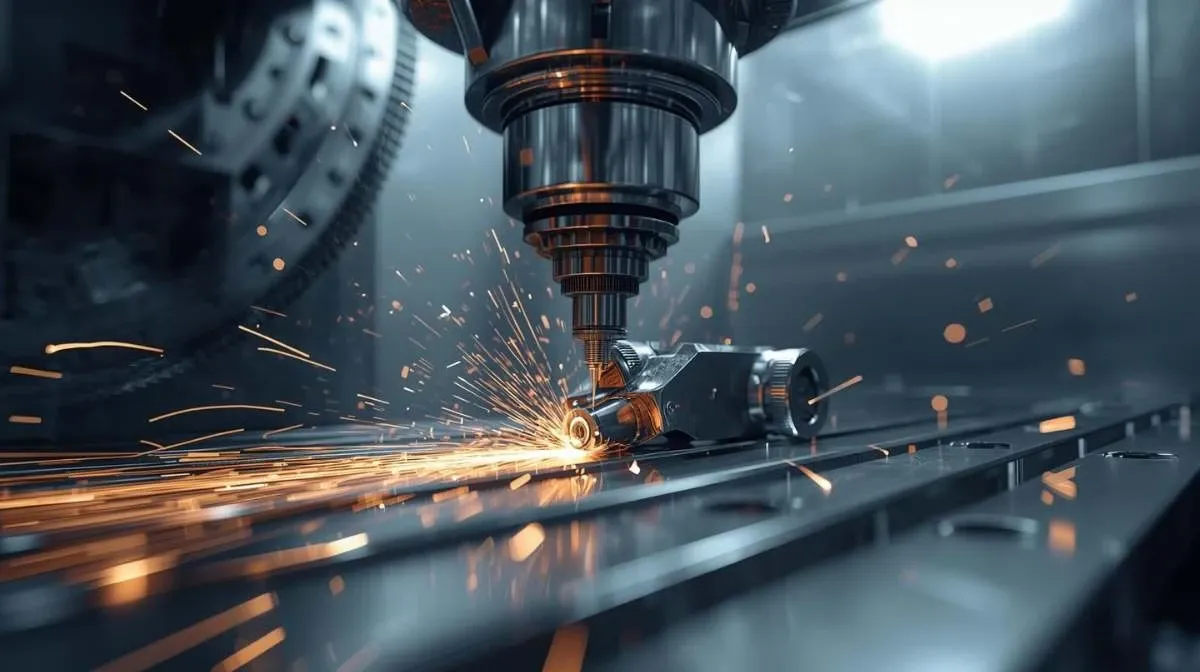
Consider the fabrication of complex metal components. Traditional cutting methods might leave rough edges or heat distortions that require secondary grinding or deburring. However, utilizing precise laser cutting technology allows manufacturers to achieve clean, sealed edges and exact dimensions immediately. By using a focused light beam to melt, burn, or vaporize material, these systems eliminate the physical stress on the workpiece that mechanical cutting tools cause.
The result is a component that is ready for the next stage of production the moment it leaves the cutter. There is no need for a technician to smooth out a burr or correct a warped edge. This specific application of technology illustrates the core goal of precision manufacturing: removing the steps where errors typically occur.
Data-Driven Quality Control
Another pillar of precision is the integration of metrology (the science of measurement) directly into the manufacturing flow. Rather than waiting for a post-production inspection to catch a bad batch, modern precision setups use in-line sensors and probes to measure parts as they are being made.
This real-time data loop allows the machinery to self-correct. If a cutting tool begins to wear down or a temperature fluctuation affects the material, the system adjusts instantly to maintain tolerance. This creates a safety net that prevents a single error from becoming a batch-wide disaster.
Also Read This: Little Minaxo: The Benefits of Automated Missed Call Text Reply Systems
Designing for Precision (DFM)
Eliminating rework actually starts before a single piece of metal is cut or plastic is molded. It begins at the design phase. Design for Manufacturability (DFM) is the practice of designing products in a way that makes them easy to manufacture precisely.
Engineers and designers must collaborate to understand the capabilities and limitations of their production equipment. A design that looks perfect in a CAD model might be a nightmare to machine in reality, leading to high rejection rates. By simplifying geometries, standardizing hole sizes, and allowing for reasonable tolerances where possible, designers set the manufacturing team up for success.
When the design is aligned with the production capabilities—such as the specific kerf width of precise laser cutting or the axis limits of a CNC mill—the likelihood of error drops precipitously.
The Path to Zero Defects
Transitioning to a precision manufacturing model is an investment, but the return on investment is found in the disappearance of waste. It is found in the warehouse space you no longer need for scrap storage, the overtime hours you no longer pay to fix botched orders, and the confidence with which you can quote lead times to customers.
Start by auditing your current rework rates. Identify which specific processes are generating the most defects. Is it a manual cutting station? Is it a worn-out mold? Once you identify the sources of error, you can apply precision solutions to address them.
In a competitive global market, the companies that succeed are not necessarily the ones who produce the fastest, but the ones who produce the most reliably. By embracing precision manufacturing, you stop paying for the work you didn’t want to do and start profiting from the work you did right.