Sudden power surges are far more common than most users realize. They can be triggered by lightning strikes, faulty wiring, large appliances switching on, or grid instability during storms.
While traditional home circuits rely on breakers to interrupt dangerous spikes, a power station must manage incoming and outgoing energy in real time.
Users rely on these systems to keep devices safe even when the electrical environment becomes unpredictable. This makes surge-handling technology a critical part of modern portable energy solutions.
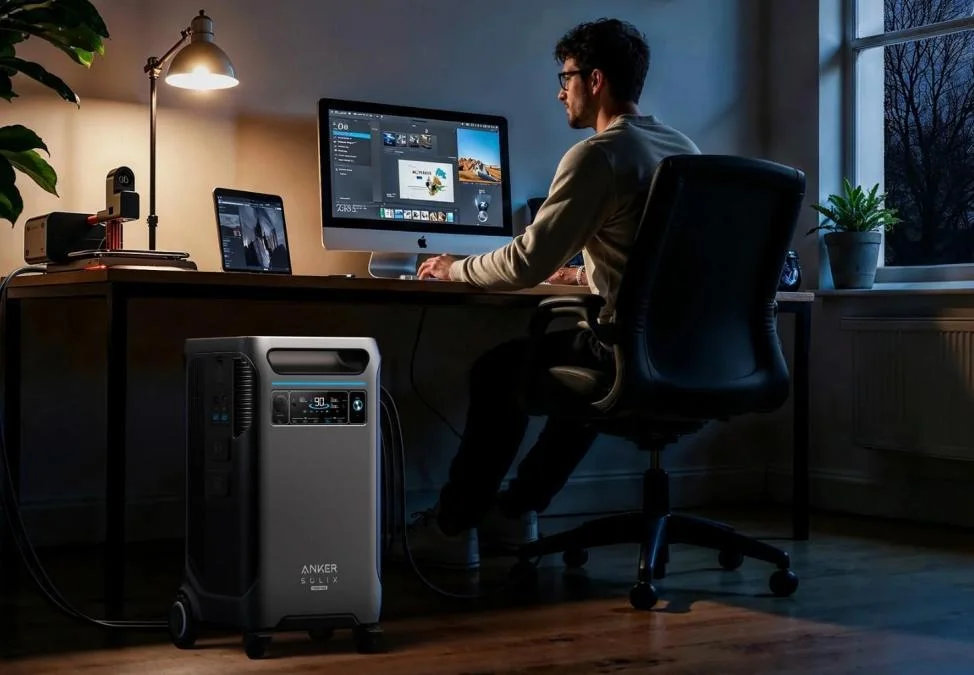
Systems like the Anker SOLIX F3800 Plus Portable Power Station demonstrate how multi-layer surge protection blends with high-capacity energy storage to create stable, controlled output under demanding conditions.
What Internal Processes Help a Power Station Respond to Surges?
Power Regulation Modules Smooth Out Voltage Fluctuations
Power stations are designed with internal regulation modules that smooth out incoming and outgoing voltage. When a surge occurs, these regulators act instantly to stabilize the current before it reaches devices. This process happens within milliseconds.
The station monitors variations continuously, comparing real-time levels to a target range. If an unexpected spike occurs, the regulator adjusts output to maintain a consistent voltage. This approach protects sensitive electronics such as laptops, routers, medical devices, or refrigerators.
When paired with high-efficiency charging options—like the F3800 Plus’s ability to accept solar or AC input—the system ensures that energy entering the battery also remains stable. Apartment users, RV travelers, and homeowners rely on this silent, automated control whenever electrical instability appears.
Built-In Safety Layers Isolate Fault Conditions
Modern power stations incorporate safety layers that isolate dangerous situations instead of letting them propagate. These layers function as checkpoints within the electrical flow.
If a sudden surge exceeds safe levels, internal protection circuitry disconnects the affected pathway while keeping the rest of the system stable. The battery management system evaluates temperature, voltage, and current before allowing power to move between components.
When systems like the F3800 Plus manage energy from sources such as generators, solar panels, or wall outlets, these safeguards become essential. They ensure the station remains operational even if external power feeds behave unpredictably.
Users rarely notice this switching because it is built into the device logic, designed to maintain seamless operation without user intervention.
Surge Handling Supports High-Load Devices Reliably
Some appliances draw large bursts of current when first switching on, particularly compressors, pumps, or power tools. These short spikes can overwhelm smaller stations, but well-engineered models accommodate them by using high output capability and buffering mechanisms inside the inverter.
The station delivers a controlled burst of power to match device requirements without exceeding safe internal thresholds. With dual-voltage 120V/240V output and a robust AC capacity, the F3800 Plus manages both starting surges and continuous loads from household equipment.
This combination ensures that sudden power demands do not result in shutdowns or device damage. For users relying on heating, cooling, or refrigeration equipment, a surge-ready design is a fundamental advantage.
How Surge-Ready Design Improves Everyday Power Stability?
Reliable Output Ensures Device Protection
Consumers expect a power station to act as a shield during unstable electrical events. Surge-ready design ensures connected electronics receive stable output even if external conditions shift unexpectedly.
Rather than passing fluctuations directly to devices, the station absorbs or moderates them internally. This controlled output protects everything from smartphones to kitchen appliances. The F3800 Plus maintains balanced delivery while its remote monitoring capabilities help users observe system health.
This degree of reliability appeals to homeowners, travelers, and renters who depend on electronics for work, safety, and comfort. The station becomes a stabilizing force, especially in environments known for intermittent grid behavior.
Adaptive Charging Prevents Stress on the Battery
Surges not only threaten output; they can also affect incoming power. When a station charges from wall outlets, generators, or solar panels, inconsistent input may stress the battery.
Adaptive charging resolves this by moderating how energy enters the system. The station adjusts its charging profile to match the input quality, slowing or redirecting energy during unstable periods.
When users recharge using solar—especially high-capacity systems like up to 3,200W on the F3800 Plus—fluctuations caused by passing clouds or orientation changes can introduce irregularities.
Adaptive charging ensures the battery receives clean, consistent energy, extending service life while maintaining efficiency.
User Confidence Comes From Automated Decision Making
People choose power stations partly because they simplify energy management. The device decides how to react to surges without requiring configuration or intervention.
Multiple sensor arrays track current, temperature, and voltage simultaneously. When a surge occurs, the device automatically triggers the correct safety response. For the user, the entire event is invisible.
This automation is essential in scenarios where attention is divided, such as outdoor activities, emergency situations, or at-home multitasking.
With smart integration—like app-based control on the F3800 Plus—users stay aware of system behavior without having to manage it manually. This trust in automated protection forms a key part of the ownership experience.
Conclusion
Power stations handle sudden power surges through an integrated system of regulation, isolation, and adaptive output control. These devices monitor electrical conditions continuously and adjust in real time to maintain safe operation.
Internal regulators smooth voltage fluctuations, safety layers isolate dangerous conditions, and buffering supports high-load appliances without interruption. For users depending on stable energy—whether during outages, travel, or daily use—this surge-handling ability is a defining feature.
Models like the Anker SOLIX F3800 Plus Portable Power Station incorporate these capabilities while offering flexible charging, scalable storage, and remote system monitoring.
As users seek reliable ways to power devices in unpredictable conditions, the role of the power station station becomes increasingly central to modern energy confidence.