In an age obsessed with the digital and the virtual, a quiet revolution of physical perfection is happening inside unassuming factories. This isn’t about brute-force manufacturing; it’s about the art of subtraction, where computer-guided tools sculpt metal, plastic, and composite with a precision that borders on the impossible. At the heart of this revolution is a process that seems deceptively simple: turning.
Yet, modern CNC (Computer Numerical Control) turning is anything but simple. It is the foundational technology behind the components that make our advanced world spin, vibrate, connect, and function with flawless reliability.
We interact with the results of this process every day but rarely see it. The satisfying, seamless rotation of a premium pen’s mechanism, the flawless balance of a high-performance drone’s motor mount, the intricate fuel injector nozzle that makes an engine both powerful and efficient—these are all children of the precision turning center.
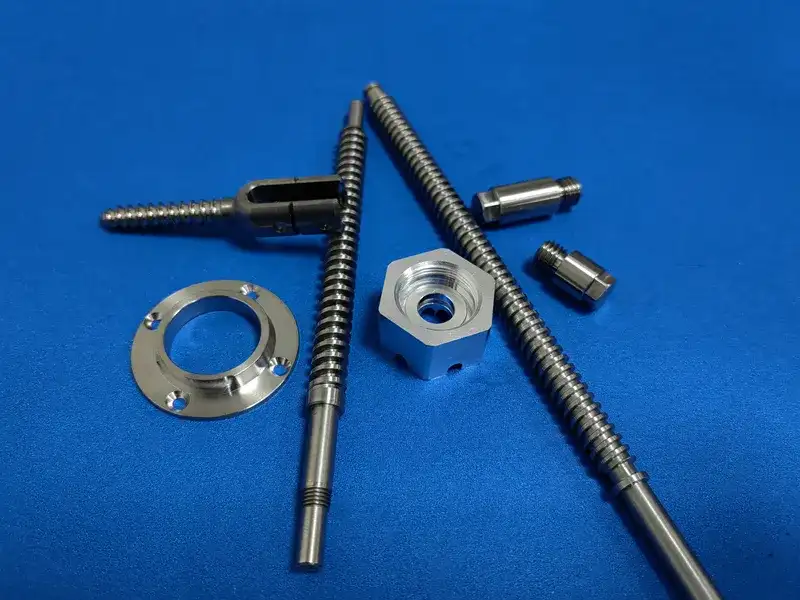
The process involves rotating a block of raw material at high speeds while a stationary cutting tool meticulously removes layers, transforming a shapeless blank into a part defined by perfect concentricity, critical diameters, and complex threaded features. It is a symphony of rotation and calculated movement, choreographed by lines of code born from engineering insight.
The Engine of Innovation: More Than Just a Lathe
While the basic principle of turning dates back centuries, the advent of CNC technology has unleashed its full potential. Today’s advanced precision CNC turning machining are technological marvels.
They are no longer simple two-axis machines but often incorporate live tooling, secondary spindles, and Y-axis capabilities, allowing them to perform milling, drilling, and cross-hole operations without ever removing the part. This “done-in-one” philosophy is a game-changer.
Imagine a single, compact machine that can take a bar of stainless steel and, in one continuous cycle, turn its entire outer profile, bore its internal cavities, drill side ports for fluid passage, and cut precision threads—all while holding tolerances tighter than a human hair.
This capability drastically reduces production time, minimizes human handling error, and, most importantly, guarantees a level of consistency that manual methods could never achieve. For industries where failure is not an option—aerospace, medical, and automotive—this consistency is the ultimate currency.
It ensures that the ten-thousandth part is functionally identical to the first, a critical factor in mass production and safety-critical applications.
The Silent Partner in Design and Aesthetics
Beyond pure engineering, precision turning plays a crucial role in product design and user experience. The tactile feel of a device, its weight distribution, and even its acoustic signature can be influenced by the quality of its turned components.
A perfectly balanced shaft eliminates vibration and noise. A seamlessly finished connector promotes a sense of quality and durability.
This is where machining transcends its industrial roots and touches on craftsmanship. The surface finish achieved by a perfectly calibrated turn, often measured in micro-inches, is not just a technical spec; it’s the difference between a part that looks and feels “cheap” and one that feels “engineered.” Brands that care about the holistic quality of their products understand this deeply.
They partner with machine shops that don’t just see a drawing but understand the part’s ultimate purpose, applying a mix of technical skill and almost artisanal attention to detail to achieve the desired result.
Meeting the Demands of Tomorrow’s Manufacturing
The trends shaping manufacturing directly influence the evolution of turning technology. The push for lightweighting in automotive and aerospace demands the machining of strong but challenging materials like titanium and high-strength aluminum alloys, which require specialized tooling and expert know-how to turn effectively.
The miniaturization of electronics and medical devices drives the need for micro-turning capabilities, working with diameters smaller than a pinhead.
Furthermore, the integration of automation and data analytics is transforming the shop floor. Modern turning centers are becoming nodes in a smart factory network, providing real-time data on tool wear, cycle times, and quality metrics.
This allows for predictive maintenance, maximizing machine uptime, and creating a closed-loop system where production is continuously optimized. The goal is a seamless, efficient, and uncannily precise manufacturing flow.
Ultimately, the value of a precision machining partner lies in their ability to bridge the gap between a designer’s vision and a viable, high-performance product. It’s a partnership built on technical dialogue.
A skilled machinist can look at a design and suggest a slight tweak to a radius or a change in material that dramatically improves manufacturability without compromising function, saving cost and time. This collaborative spirit is essential for innovation.
For companies seeking to navigate this complex landscape, finding a partner with deep expertise in advanced turning processes is key. Firms that specialize in producing high-tolerance CNC turned precision parts often serve as an extension of their clients’ engineering teams.
They bring not just machine time, but valuable insight into material behavior, tooling selection, and design optimization, ensuring that even the most ambitious designs can be translated into reliable, real-world components.
In the end, CNC turning is more than a process; it is an enabler. It is the quiet, precise force that allows bold ideas to take physical form, ensuring that the gears of progress—both literal and figurative—turn smoothly, reliably, and beautifully. It reminds us that in our digital future, the mastery of the physical world, achieved through one precise cut at a time, remains as vital as ever.