Portable power stations combine rechargeable batteries, charging electronics and output ports in a transportable unit. They can keep selected devices running away from mains power or during an outage, but they cannot replace a whole-house system without a properly designed installation. Choosing one starts with the equipment you intend to power.
Quick answer: List each device’s power draw in watts and expected run time, calculate watt-hours needed, then add reasonable capacity for inverter losses and reserve. Check continuous AC output, surge rating, battery chemistry, charging inputs, safety certification, warranty and ventilation. Never connect a portable unit to house wiring without a correctly designed and approved transfer arrangement.
Understand Watts and Watt-Hours
Watts describe how much power a device draws at an instant, while watt-hours describe stored energy or consumption over time. A 60-watt device running for five hours needs roughly 300 watt-hours before conversion losses. Check both the station’s usable battery capacity and maximum output; a high energy capacity does not guarantee it can start a motor or high-demand appliance.
Check Starting Surges and Appliance Compatibility
Refrigerators, pumps and tools can demand more power at startup than during normal operation. Compare the station’s continuous and peak output to the actual load and manufacturer requirements. Do not assume that a unit advertising a large peak figure can sustain that load for long periods.
Battery Chemistry and Lifespan
Many portable stations use lithium-ion batteries, including lithium iron phosphate (LiFePO4) variants. Performance, cycle life and temperature limits vary by product design. Compare battery-life claims only when the test conditions and remaining-capacity threshold are disclosed. Follow storage, charging and maintenance instructions to reduce damage.
Safe Use in a Home or Workplace
Use the station in a dry, ventilated location according to its manual. Keep it away from water, damaged extension cords and blocked cooling vents. Never connect two power sources together through an improvised ‘suicide cord’ or backfeed a household socket. Any home transfer switch or fixed electrical work should be handled by a qualified electrician under local requirements.
Solar Recharging Has Limits
A solar input can provide off-grid recharging when suitable panels, connectors and conditions are available. Actual energy production changes with weather, panel orientation, shade and daylight hours. Compare the solar controller’s voltage/current limits with the selected panel setup before connecting it.
Compare Product Ranges and Support
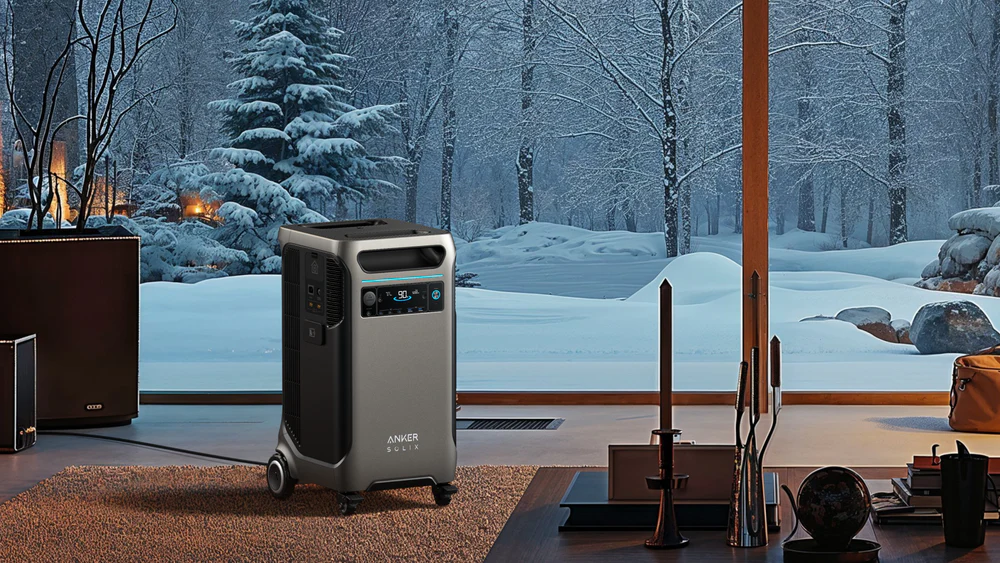
Suppliers such as Anker SOLIX portable power stations offer models for different battery capacities and use cases. Compare the exact product’s output waveform, charging rate, ports, battery warranty, service arrangements and current safety documentation.
The same power station product range may include very different specifications. Check the actual model number, not a headline family name, before assuming appliance compatibility.
How to Plan for an Outage
Prioritize essentials such as communications, safe lighting and approved medical or accessibility equipment, and make an alternative plan for any equipment that must run continuously. Test the system before an emergency, keep charging cables available and know how to operate it safely without creating trip hazards.
Final Takeaway
A portable station is most valuable when correctly sized for a defined set of loads and used within its safety limits. Calculate energy needs, verify peak output, check battery and warranty details, and avoid unsupported claims of complete energy independence. Battery chemistry and lifespan influence portable-power decisions, so our LiFePO4 battery guide provides useful background for comparing storage options.