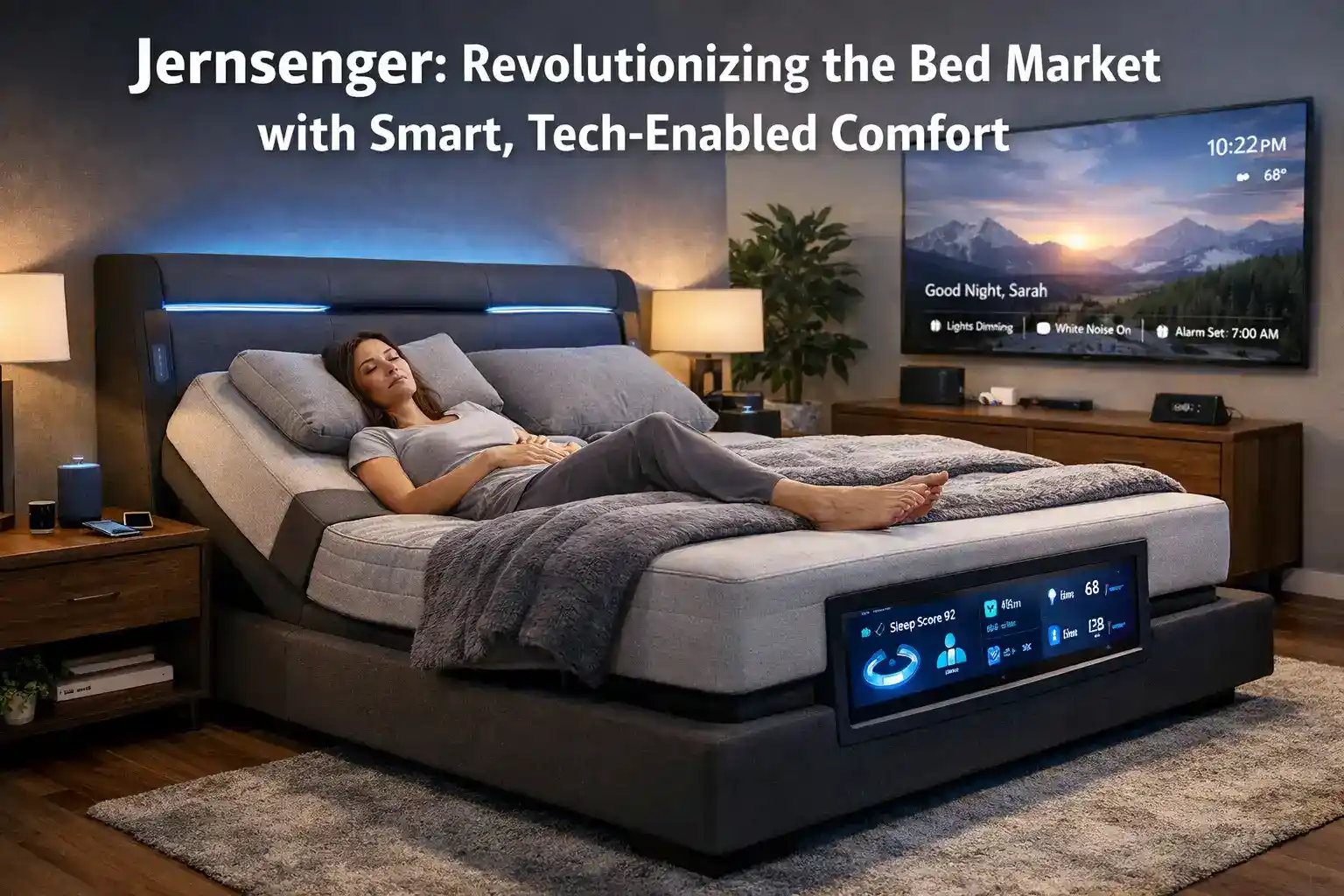
Quick answer: Jernsenger is the Norwegian plural of jernseng and means “iron beds.” It is not a verified smart-bed brand. Traditional jernsenger are metal bed frames valued for durability, open visual design and easy cleaning. Modern versions may include powder-coated steel, adjustable bases or separate sleep-tracking accessories, but a connected mattress and an iron bed are different products. Buyers should compare frame size, load support, joint quality, noise, mattress compatibility and warranty.
What Does Jernsenger Mean?
In Norwegian, jern means iron and senger is the plural form of bed. Jernsenger therefore refers to iron beds or, in modern product descriptions, metal bed frames designed in an iron-bed style.
The word has recently appeared in English-language articles that incorrectly describe Jernsenger as a technology company or a new category of AI-powered mattress. Reliable evidence for such a brand is not publicly available. Treating the term as a verified manufacturer would mislead readers.
A better explanation begins with the real meaning, then shows how traditional iron frames can be combined with modern mattresses, adjustable bases and optional sleep technology.
Traditional Iron Beds and Modern Smart Beds
An iron bed is primarily a frame. It supports a mattress through metal rails, slats or a platform. A smart bed is defined by integrated or connected technology such as sleep sensors, automatic firmness control, temperature adjustment or app-based tracking.
These categories can overlap, but they should not be confused. An iron-style headboard may sit around an adjustable smart base, while a sensor pad can be placed beneath a mattress on a compatible metal frame.
| Feature | Traditional jernsenger | Modern smart bed |
|---|---|---|
| Main purpose | Durable mattress support and visual style | Adjustable comfort or sleep monitoring |
| Typical material | Iron, steel or mixed metal | Foam, air chambers, motors and electronics |
| Power required | No | Often yes |
| Data collection | None | Possible through sensors and apps |
| Maintenance | Tighten joints and protect finish | Hardware, software and account support |
| Best for | Long-lasting structure and classic design | Adjustability, tracking or temperature features |
Why Iron Beds Became Popular
Metal beds expanded as industrial manufacturing made standardised components easier to produce. They were used in homes, hospitals, dormitories and institutions because the frames were strong, relatively easy to clean and less absorbent than unfinished wood.
Today, shoppers choose iron beds for different reasons. Some want Victorian curves and decorative details, while others prefer a minimal Scandinavian frame with straight lines and a matte finish.
Modern products labelled “iron beds” are not always made from traditional wrought iron. Many use tubular or fabricated steel because it is easier to manufacture, transport and finish. Buyers should read the material specification instead of relying only on the product name.
Types of Jernsenger
Classic wrought-iron style beds
These frames use curved rails, decorative joints and traditional headboard patterns. True hand-worked wrought iron can be heavy and expensive, while mass-market versions normally recreate the look with steel.
Minimal Scandinavian metal frames
Minimal frames focus on clean geometry, neutral colours and practical construction. They work well in smaller rooms because an open headboard and raised base can make the space feel less crowded.
Platform metal beds
A platform frame supports the mattress with closely spaced slats or a metal grid and may not need a box spring. Check the mattress maker’s support requirements because excessive gaps can damage some foam mattresses.
Metal bunk and day beds
These designs save space but require careful attention to guardrails, ladder stability and weight limits. Assembly instructions should be followed exactly, especially in rooms used by children.
How to Choose a Quality Iron Bed
Start with the mattress dimensions rather than labels such as single, double or king, because nominal sizes vary by country. Measure the room, doorways and any skirting boards that may affect placement.
- Frame material: confirm whether the product is iron, steel or an aluminium alloy.
- Load rating: include the mattress, sleepers and bedding when checking capacity.
- Joint design: welded sections can feel rigid, while bolted frames are easier to move but may need tightening.
- Slat spacing: match it to the mattress warranty requirements.
- Centre support: wider beds normally need a centre rail and additional legs.
- Finish: inspect powder coating, paint coverage and protection around welds.
Do not judge strength from weight alone. A heavy decorative frame can still have weak joints, while a properly engineered steel structure may be lighter and more stable.
Common Problems and Practical Fixes
Squeaking and movement
Noise normally comes from loose bolts, metal-to-metal contact or an uneven floor. Retighten fasteners according to the manual, check that every leg touches the floor and use only manufacturer-approved washers or pads.
Rust and damaged finish
Indoor frames can still rust where paint is scratched or humidity remains high. Keep the surface dry and follow the manufacturer’s repair instructions before corrosion spreads beneath the coating.
Mattress sliding
A mattress may move when the platform is smooth or the fit is too loose. Confirm the frame is assembled square and use a compatible non-slip layer only if it does not block ventilation or violate the mattress warranty.
Adding Smart Technology to a Metal Bed
A traditional jernsenger frame can support some separate smart accessories, including under-mattress sensor pads, adjustable bases, temperature-control covers and connected lighting. Compatibility must be checked before purchase.
Smart-bed sensors may estimate movement, heart rate, breathing or sleep duration, but consumer devices should not be treated as medical diagnostic equipment. Hospital smart mattresses operate in a different regulated context and require trained clinical interpretation.
Connected sleep products also introduce privacy questions. Review what data is collected, whether cloud storage is required, how long records are retained and whether the account can be deleted. Our guide to data governance practices explains why collection, access and retention rules matter.
Smart Bed Benefits and Limitations
- Possible benefits: adjustable positions, dual-zone comfort, automatic firmness changes and passive sleep tracking.
- Limitations: higher price, electricity use, app dependence, subscription costs and difficult repairs.
- Accuracy concerns: sleep estimates may not match a clinical sleep study.
- Ownership concerns: features may depend on servers, accounts or continued manufacturer support.
Before adding several connected devices, consider energy and backup needs. The decision process in our article on solar panels with battery storage offers a useful example of comparing upfront cost, maintenance and long-term value.
Style Ideas for Modern Bedrooms
A black frame creates contrast against light walls, while cream or white metal has a softer cottage appearance. Brass-toned finishes can feel luxurious but should be compared with the room’s handles, lamps and mirror frames.
Keep bedding simple when the headboard is highly decorative. With a minimal frame, layered textiles can add warmth without hiding the structure. Leave enough clearance for drawers, cleaning and any adjustable mechanism.
Technology should remain secondary to comfort and usability. A bedroom full of bright status lights, alerts and screens may work against a calm sleep environment. The same principle applies when selecting a new device through an expert laptop review: useful features matter more than an impressive specification list.
Buying Mistakes to Avoid
- Assuming every “iron bed” is made from traditional wrought iron.
- Buying before checking exact mattress and room dimensions.
- Ignoring centre support and slat-spacing requirements.
- Choosing a smart feature without checking subscriptions or privacy settings.
- Expecting consumer sleep tracking to diagnose a medical condition.
- Using an adjustable base inside a frame without confirming clearance.
Unknown product claims deserve the same verification used for other AI-enabled tools. Our AI image detector guide explains why accuracy statements need clear tests and limitations.
Frequently Asked Questions
Is Jernsenger a smart-bed company?
No verified evidence establishes Jernsenger as a smart-bed company. The word is Norwegian and means iron beds.
Are iron beds stronger than wooden beds?
Either material can be strong when properly designed. Joint construction, centre support, material thickness and load rating matter more than the broad material label.
Can an adjustable base fit inside an iron frame?
Sometimes, but dimensions, cross rails, centre legs and motor clearance must match. Confirm compatibility with both manufacturers.
Do smart beds improve sleep?
They may improve comfort or awareness for some users, but results vary. A smart bed cannot replace adequate sleep time or professional care for persistent sleep problems.
Conclusion
Jernsenger should be understood first as iron beds, not as a fictional technology brand. Their value comes from a strong frame, correct mattress support, repairable construction and a style that can work in both traditional and modern rooms.
Smart technology can be added when it solves a real comfort or monitoring need. Compare compatibility, privacy, subscriptions and support before paying more, and keep medical decisions separate from consumer sleep scores.



One thought on “Jernsenger: Iron Beds, Styles and Smart Bed Options”