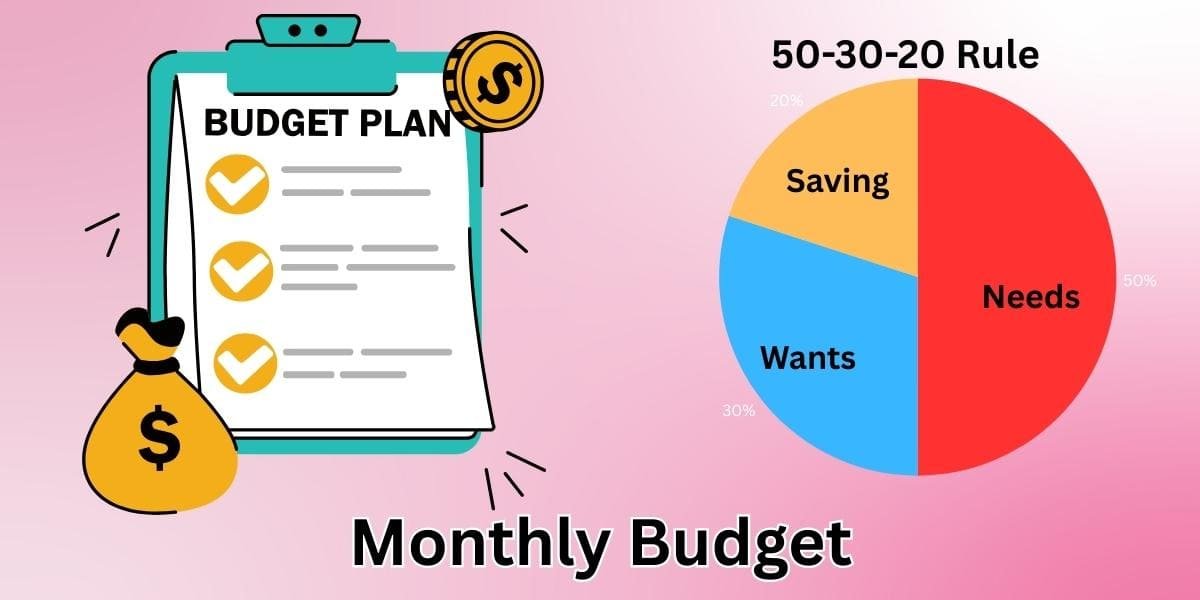
A monthly budget is a written plan for how you will use your take-home income. It helps you pay essential bills, prepare for irregular expenses, manage debt, and decide what you can reasonably save or spend.
A useful budget is based on your real income and recent transactions. It should not depend on an ideal version of your spending or a percentage rule that does not fit your housing costs and family needs.
You can build your first budget with paper, a spreadsheet, or a free budgeting tool. The method matters less than using accurate numbers and reviewing the plan regularly.
Financial note: This guide provides general education, not personal financial advice. Currency, taxes, benefits, debt rules, and financial products vary by country and individual circumstances.
Quick Answer
Calculate your reliable monthly take-home income, then list essential bills, flexible spending, debt payments, savings, and irregular costs. Subtract the complete spending plan from income. If the answer is negative, reduce flexible expenses or seek help with unaffordable bills. Track actual spending and update the budget each month.
The Monthly Budget Formula
The basic formula is:
Monthly take-home income − monthly expenses − planned savings = money remaining
A positive result gives you room for another goal or a small buffer. A result of zero means every unit of income has been assigned.
A negative result means the current plan costs more than the income available. Moving numbers between categories cannot solve this; spending, payment arrangements, income, or goals must change.
Do not use your salary before tax unless your budget also includes every tax and payroll deduction. The amount that actually reaches you is usually the more practical starting point.
Step 1: Gather Your Financial Records
Begin with recent bank statements, credit-card statements, bills, pay records, receipts, benefit information, and debt statements.
One month of transactions may miss quarterly, seasonal, or annual costs. Review at least two or three months when possible, and look through the previous year for major irregular bills.
The Financial Consumer Agency of Canada’s budgeting guidance recommends using recent pay records, bills, and account statements to create a budget based on the current situation.
Keep the records in one secure place. Avoid entering account passwords or full card details into an unknown budgeting application.
Step 2: Calculate Reliable Monthly Income
List income you can reasonably expect to receive during the month. This may include wages, business income, pension, benefits, child support, or another regular source.
Use take-home income after taxes and payroll deductions. If two adults share household costs, agree on which income and bills belong in the combined budget.
People with weekly pay can calculate a monthly average by multiplying weekly take-home pay by 52 and dividing by 12. For biweekly pay, multiply by 26 and divide by 12.
An average is useful for planning, but the payment dates still matter. Some months may contain an extra weekly or biweekly payment, while bills continue on their normal schedule.
Step 3: Handle Irregular Income Carefully
Freelancers, commission workers, seasonal employees, creators, and business owners may not know their exact monthly income in advance.
Review several months and identify a conservative baseline. Build the essential budget around an amount you can reasonably expect rather than the best month you have ever earned.
Keep business income and business expenses separate where possible. Money collected from a client is not automatically available for personal spending if taxes, supplier costs, refunds, or business bills remain unpaid.
Professional athletes and other contract workers can also have unusual payment structures. The existing Little Minaxo: Understanding NFL Rookie Salaries: A Comprehensive Guide shows why a headline income figure may differ from usable monthly cash.
Step 4: List Fixed Essential Bills
Fixed bills usually stay similar each month and have clear due dates. Start with the payments that protect housing, essential services, transportation, health, and legal responsibilities.
These may include rent or mortgage payments, utilities, phone, internet, insurance, childcare, school fees, required transport, and minimum debt payments.
A bill is not automatically a “need” simply because it arrives every month. A subscription can be fixed but optional, while medication may be necessary but change in cost.
Write the due date beside every bill. A monthly budget can appear affordable while still failing because several payments fall before the next salary deposit.
Step 5: Estimate Flexible Essentials
Groceries, fuel, household supplies, medicine, personal care, and some utility bills change from month to month.
Use recent transaction averages rather than guessing. If grocery spending was $520, $610, and $570 during the last three months, an initial estimate near $567 is more realistic than choosing $400 without a plan.
Separate flexible needs from optional spending. Basic groceries may be essential, while restaurant meals and convenience deliveries can be tracked in another category.
Do not make an unrealistically low estimate to force the budget to balance. The plan must support actual life, not only produce a pleasing total.
Step 6: Add Debt Payments
List the minimum required payment, interest rate, balance, and due date for each debt. Include credit cards, personal loans, vehicle finance, student debt, and any other borrowing.
Make every required minimum payment part of the essential plan. Extra payments can be listed as a separate financial goal.
Do not send all available cash to debt while leaving no money for food, housing, or urgent expenses. A missed essential bill may create another fee or force additional borrowing.
If minimum payments are unaffordable, contact creditors early and seek support from a reputable nonprofit or regulated debt adviser in your jurisdiction. Avoid companies promising instant debt removal.
Step 7: Plan for Irregular Expenses
Irregular expenses are predictable even though they do not occur every month. Examples include annual insurance, school costs, gifts, vehicle service, clothing, repairs, and professional fees.
Create a sinking fund by dividing the expected amount by the number of months remaining. If annual vehicle registration will cost $360 in six months, plan to set aside $60 monthly.
Keep each sinking fund labeled so money for repairs is not mistaken for ordinary spending. A separate savings account or spreadsheet category may help.
This step prevents a known annual bill from being treated as an emergency. A true emergency is usually unexpected and urgent.
Step 8: Set Savings Goals
Savings should be connected to a purpose. You may be building an emergency fund, preparing for education, replacing an appliance, moving home, or funding another goal.
Choose a realistic monthly amount after protecting essential needs and required debt payments. Saving 20% is not possible or appropriate for every household.
The 50/30/20 method can be a starting framework: 50% for needs, 30% for wants, and 20% for savings or debt goals. It is not a law, and high housing costs may make those percentages impossible.
Even a small automatic transfer can build consistency. If income is currently too tight to save, begin by recording the goal rather than pretending the money is available.
Step 9: Include Optional Spending
A budget should contain some room for personal choices when income allows. A plan that bans every enjoyable expense may be difficult to follow.
List restaurant meals, entertainment, hobbies, clothing beyond essentials, gifts, and subscriptions separately. This makes it easier to reduce flexible spending without confusing it with rent or medicine.
Do not label every optional item as waste. The aim is to choose spending intentionally and keep it within an affordable limit.
When the budget is negative, start with expenses that can be paused or reduced safely. Canceling an unused subscription is easier than solving a major housing-cost problem, but both may need attention.
Step 10: Build the Complete Budget
Imagine a household with monthly take-home income of $4,000. The figures below are only an example, not recommended amounts.
| Budget category | Monthly amount |
|---|---|
| Housing and utilities | $1,650 |
| Groceries and household supplies | $600 |
| Transport | $350 |
| Insurance and health | $250 |
| Minimum debt payments | $300 |
| Irregular-expense funds | $250 |
| Emergency savings | $250 |
| Optional spending | $250 |
| Monthly buffer | $100 |
| Total | $4,000 |
This plan assigns every dollar while retaining a small buffer. Another household with the same income may require very different amounts.
If expenses total $4,300, the household must find a $300 change. It could reduce optional spending, negotiate a bill, adjust savings temporarily, increase income, or address a larger fixed cost.
Step 11: Match Bills With Pay Dates
A budget answers whether the month is affordable. A cash-flow calendar answers whether money will be available on each due date.
Write every income date and bill date on a calendar. Track the expected account balance after each payment.
If cash becomes negative during the month even though the monthly total works, ask providers whether a due date can be changed. Keep enough from an earlier payment to cover later bills.
Avoid treating an overdraft or credit card as normal income. Borrowing can hide a timing problem while creating interest and fees.
Step 12: Choose a Tracking Method
The Consumer Financial Protection Bureau’s monthly budget worksheet follows a simple process: list income, list expenses, and subtract spending from income.
Paper can work well for people who want a visible daily record. A spreadsheet makes totals and category changes easier, while a budgeting app may import transactions automatically.
Cash envelopes can limit selected flexible categories, but they are not suitable for every payment or household. Digital category balances can provide a similar structure.
Choose the simplest method you will continue using. A complicated system abandoned after one week provides less value than a basic monthly sheet.
Step 13: Track Actual Spending
Record spending daily or review transactions at least once each week. Waiting until the end of the month makes it harder to remember cash purchases or correct overspending.
Compare planned and actual amounts by category. If groceries exceed the plan while entertainment remains low, you may be able to adjust without harming essential payments.
Do not move an expense into another category only to make the original category look successful. The purpose is accurate decision-making, not perfect-looking numbers.
Watch for pending card transactions and delayed automatic payments. The bank balance may include money already committed to a bill.
Step 14: Review the Budget Monthly
At the end of the month, calculate the difference between planned and actual spending. Investigate the largest differences first.
Ask whether the problem was a one-time event, an unrealistic estimate, a price increase, or a repeated habit. Then update the next budget using what you learned.
A changing budget is not a failed budget. Rent, income, health, childcare, transport, and family needs can all change.
Review the plan immediately after a job loss, separation, new debt, major move, or another financial change. Waiting for the normal month-end review may be too late.
Budgeting on a Low Income
When income barely covers essentials, budgeting cannot create money that does not exist. Its purpose becomes identifying the shortage early and protecting the most important payments.
Prioritize housing, food, essential utilities, medication, necessary transport, legal responsibilities, and other urgent needs. The order may depend on local consequences and available assistance.
Check eligibility for government benefits, food support, utility programs, healthcare assistance, or nonprofit services. Use official government websites rather than paying someone to submit a simple application.
If bills remain unaffordable after all reasonable cuts, seek qualified help. The problem may require income support or creditor arrangements, not greater personal discipline.
Common Budgeting Mistakes
A common mistake is using gross income instead of take-home pay. This creates money in the plan that never reaches the account.
Other mistakes include forgetting annual expenses, treating credit as income, using unrealistic grocery estimates, and setting a savings target before covering essential bills.
Do not copy another household’s percentages without considering your situation. Needs and wants differ according to location, disability, transport, family size, and work.
Finally, avoid quitting after one difficult month. The first budget is an estimate; later versions become more accurate through real transaction data.
Monthly Budget Checklist
Before finalizing the plan, confirm that you included:
- All reliable take-home income
- Fixed and flexible essential expenses
- Minimum debt payments
- Annual and seasonal costs
- Savings or emergency goals
- Optional spending
- A small buffer when possible
- Bill and income dates
- A weekly tracking method
- A date for monthly review
Final Thoughts
A successful monthly budget begins with evidence. Use real income, recent transactions, current bills, and upcoming irregular costs.
Assign money first to essential needs and required payments. Then decide what can go toward savings, extra debt payments, and optional spending.
Do not expect the first plan to be perfect. Track actual spending, correct inaccurate categories, and rebuild the budget whenever income or responsibilities change.
The goal is not to follow a fashionable percentage. It is to create a plan that helps you make the next month affordable, understandable, and less dependent on avoidable borrowing.