Quick answer: To overcome laziness, identify what is making you avoid the task, reduce the first step to something that takes five minutes, and remove the easiest distraction. A realistic routine, enough sleep, regular movement, and a short daily priority list can improve energy and consistency. If low energy continues for weeks or affects daily life, speak with a qualified health professional instead of blaming yourself.
What Laziness Really Means
People often use the word “lazy” when they delay work, struggle to begin, or choose an easier activity. However, the label does not explain the cause. Task avoidance can come from tiredness, unclear instructions, fear of failure, perfectionism, stress, low mood, or a goal that feels too large.
The best way to overcome laziness is to stop treating it as a fixed personality trait. Look for the barrier behind the behaviour. A person who needs rest requires a different solution from someone who feels overwhelmed by a complicated project.
Rest is also not the same as laziness. Planned recovery supports attention and performance. The real problem begins when avoidance becomes a repeated pattern that prevents you from meeting responsibilities or pursuing goals that matter to you.
Common Reasons You May Feel Lazy
Before changing your daily habits, ask what normally happens just before you delay a task. The answer may reveal a practical problem that motivation alone cannot solve.
- Low energy: Poor sleep, irregular meals, inactivity, illness, or an overloaded schedule can reduce physical and mental energy.
- Unclear next steps: A vague task such as “work on my business” gives the brain no obvious place to begin.
- Fear and perfectionism: Worry about mistakes can make postponing the task feel safer than attempting it.
- Constant distractions: Notifications and short-form content provide immediate rewards and interrupt focused work.
- No personal reason: A goal borrowed from someone else may not create enough commitment to support consistent action.
If you feel exhausted even after adequate rest, lose interest in activities you usually enjoy, or find that daily responsibilities have become unusually difficult, do not assume you simply lack discipline. Persistent fatigue and loss of motivation can have physical or mental-health causes that deserve professional assessment.
Daily Habits That Help Overcome Laziness
| Daily habit | How to start | Why it helps |
|---|---|---|
| Five-minute start | Work on one clear action for five minutes | Reduces the pressure of beginning |
| Three-priority list | Choose one important and two smaller tasks | Prevents an unrealistic workload |
| Focus block | Put the phone away for 25 minutes | Protects attention from interruptions |
| Daily movement | Walk or stretch at a consistent time | Supports energy, mood, and wellbeing |
| Evening reset | Prepare tomorrow’s first task before bed | Removes morning decision-making |
1. Make the first action extremely small
Large goals create mental resistance because the finish line feels far away. Convert the goal into a physical action that can be completed immediately. “Study chemistry” becomes “open the book and answer question one.” “Clean the room” becomes “put five items back in place.”
A small start is not a weak plan. It creates momentum and gives you useful information about the task. Once you begin, you can decide whether to continue for another five or ten minutes without promising yourself an exhausting work session.
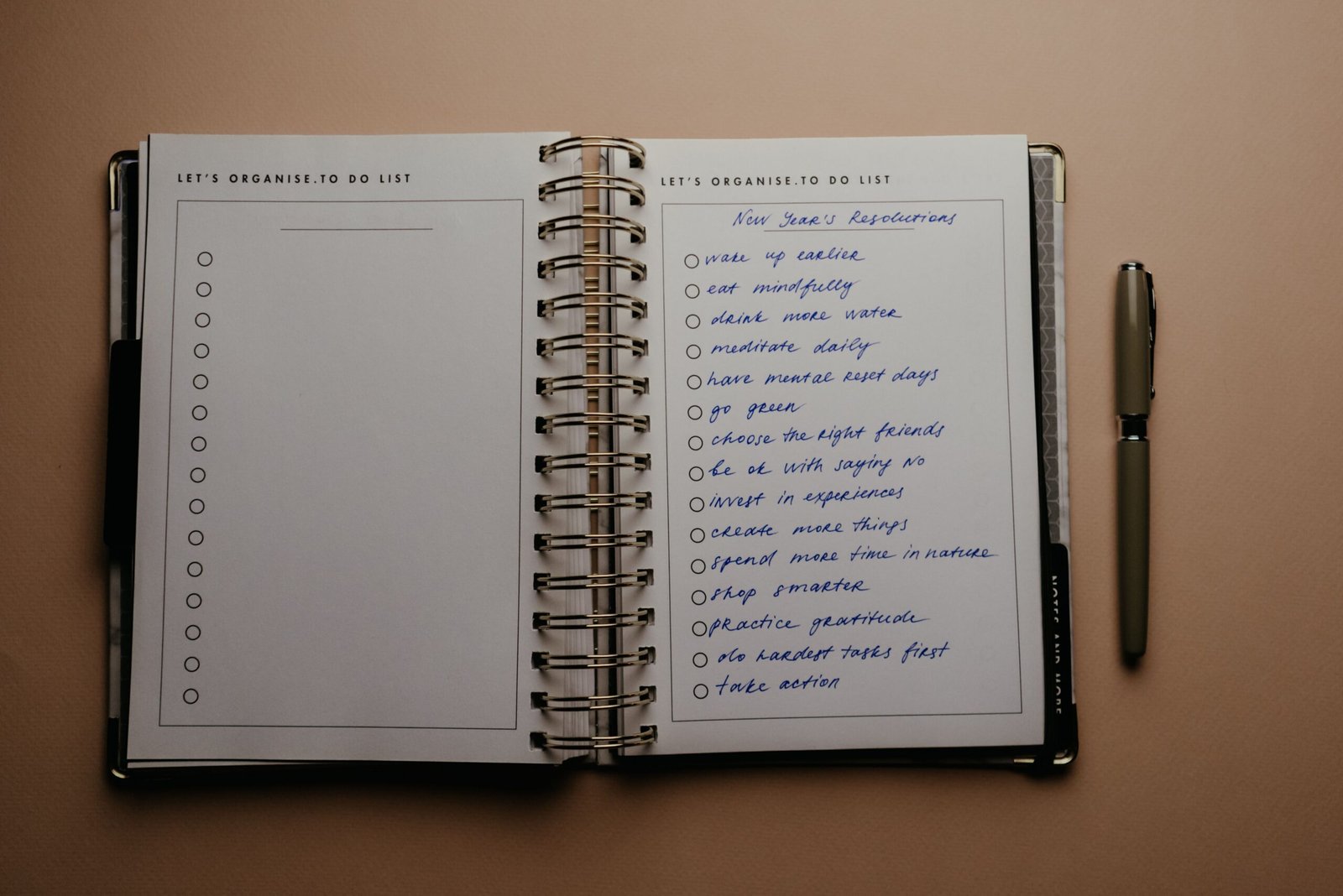
2. Use a three-priority daily list
A long to-do list often produces guilt rather than action. Select three priorities: one task that meaningfully moves your day forward and two smaller tasks that maintain your routine. Complete the important task during the time when your energy is normally strongest.
Write specific verbs. “Send the proposal,” “edit the introduction,” or “walk for 15 minutes” is easier to follow than “be productive.” If planning money is one of the jobs you keep delaying, this step-by-step monthly budget guide shows how a broad goal can be divided into manageable actions.
3. Design your environment for action
Willpower becomes less important when your surroundings support the behaviour you want. Keep the required document open, place exercise shoes near the door, prepare a water bottle, and remove unrelated tabs before a focus session. Put the phone in another room if notifications repeatedly interrupt you.
Use friction in both directions. Make helpful actions easier and distracting actions slightly harder. Logging out of entertainment apps or turning off non-essential alerts may be enough to create a pause in which you can make a deliberate choice.
4. Protect sleep and physical energy
A productivity system cannot replace recovery. Keep a reasonably consistent sleep and wake time, create a quieter evening routine, and avoid building a schedule that depends on constant sleep loss. The CDC’s sleep guidance explains that sufficient sleep supports health and emotional wellbeing.
Regular movement can also support energy and mood. The World Health Organization’s physical activity guidance recommends reducing sedentary time and being physically active according to your ability. Begin safely with a short walk or gentle movement rather than choosing an extreme routine you cannot maintain.
5. Separate focus time from break time
Choose a short focus period, such as 20 or 25 minutes, and work on one task only. When the period ends, take a deliberate break. A defined break is more restorative than checking social media every few minutes while pretending to work.
If the timer feels restrictive, use a task-based boundary instead: draft one section, sort one folder, or complete five practice questions. The purpose is not to follow a fashionable technique. It is to give work a clear beginning and end.
What Creators and Public Figures Can Teach About Consistency
Successful creators are often presented as naturally motivated, but public results usually come from repeatable systems: content calendars, preparation, scheduled practice, and teams that reduce avoidable decisions. The useful lesson is not to copy a celebrity’s private routine. It is to build a simple system that fits your own responsibilities and energy.
Our guide to LittleminaXO’s lifestyle and daily routine habits explores how consistency can support a creator’s public work. You can also read how LittleminaXO became famous for a broader look at visibility, persistence, and creator growth.
Use these stories as inspiration, not evidence that one morning routine guarantees success. Public figures have different resources, schedules, and support systems. Your best routine is the one you can repeat without damaging your sleep, health, relationships, or essential responsibilities.
How to Build Discipline Without Waiting for Motivation
Motivation changes from day to day, while a cue-based habit gives you a predictable starting point. Attach a small action to something that already happens: review your priorities after breakfast, walk after lunch, or prepare tomorrow’s workspace before closing your laptop.
Track whether you completed the action, not whether the entire day was perfect. A simple calendar mark can show consistency without turning progress into another complicated project. Review the pattern weekly and adjust any habit you repeatedly avoid.
Accountability can help when it remains supportive. Tell a friend what you plan to finish and when you will report back. For creator-focused motivation, the LittleminaXO biography provides context about building a recognisable digital identity over time.
Mistakes That Make Laziness Worse
- Calling yourself lazy: A negative label hides the actual barrier and makes change feel less possible.
- Planning an overnight transformation: A strict schedule may work briefly but often collapses when normal life interrupts it.
- Using motivation videos as work: Inspiration feels productive, but it cannot replace the first concrete action.
- Multitasking: Rapidly switching between tasks increases distraction and leaves more work unfinished.
- Ignoring health concerns: Persistent fatigue, low mood, pain, or sleep problems require appropriate professional advice.
Another mistake is trying to “catch up” with an unrealistic workload after one unproductive day. Restart with the next useful action. Consistency grows when missing once is treated as information, not as proof that you have failed.
A Practical Seven-Day Reset Plan
On day one, identify the task you avoid most and write the smallest possible first step. On day two, remove one recurring distraction. On day three, create a three-priority list. On day four, add a short walk or safe movement break.
On day five, prepare your first task the night before. On day six, complete one focus block with the phone away. On day seven, review what made action easier and choose two habits to continue. This reset is intentionally simple so that you can learn what works without rebuilding your entire life.
When “Laziness” May Need Professional Help
Seek qualified medical or mental-health advice if low energy, poor concentration, hopelessness, major sleep changes, or loss of interest persists and interferes with everyday life. These experiences should not be diagnosed from an online article, and they are not a moral failure.
This guide provides general lifestyle information, not medical diagnosis or treatment. A healthcare professional can consider your symptoms, health history, medicines, sleep, nutrition, and other factors that a general productivity guide cannot assess.
Frequently Asked Questions
How do you overcome laziness quickly?
Choose one action that takes five minutes, remove your main distraction, and begin before negotiating with yourself. Quick action can break avoidance, but lasting improvement comes from identifying whether tiredness, fear, confusion, or an unrealistic workload caused the delay.
Is laziness a mental-health condition?
Laziness is not a medical diagnosis. However, persistent low motivation or fatigue can sometimes occur alongside physical or mental-health conditions. Consult a qualified professional when symptoms continue, worsen, or interfere with normal daily functioning.
Can exercise help reduce laziness?
Regular movement may support energy, mood, and general wellbeing. Start at a safe level that suits your health and ability. Exercise is helpful, but it is not a substitute for medical care when ongoing fatigue has an underlying cause.
How can students stop delaying study?
Turn the subject into a specific task, study for a short defined period, keep the phone away, and test yourself instead of only rereading notes. A small daily study session is usually easier to maintain than an occasional exhausting session.
What is the best daily habit for discipline?
Choose tomorrow’s first important action before the current day ends. This removes uncertainty and gives you a clear starting cue. Keep the action small enough to begin even when motivation is low.
Final Thoughts
You do not overcome laziness by becoming motivated every hour. You improve by understanding the reason for avoidance, making the first step smaller, protecting your energy, and building an environment where useful action is easier.
Start with one five-minute task today. Repeat it tomorrow, review what gets in the way, and adjust the system. Small actions performed consistently are more valuable than a perfect routine that lasts only a few days.