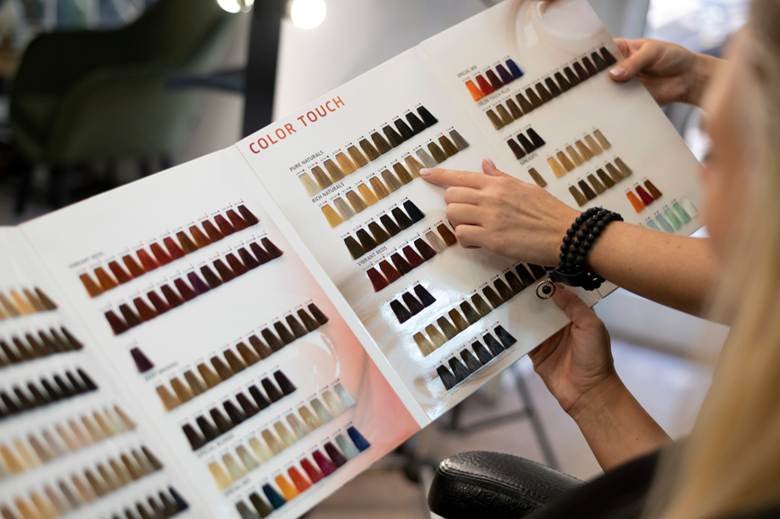
The right hair color should work with your natural base, hair condition, skin undertone, lifestyle, and maintenance budget. A celebrity-inspired shade may provide useful ideas, but copying the exact formula does not guarantee the same result.
Lighting, filters, extensions, previous dye, natural hair depth, and professional styling can all change how a celebrity’s color appears. Your colorist must adapt the inspiration to your own hair.
This guide explains how to select a shade, compare common coloring techniques, prepare for a consultation, reduce avoidable damage, and maintain the finished result safely.
Safety note: Hair dye can cause irritation or an allergic reaction. Follow the product instructions and complete the recommended allergy test every time. Seek urgent medical help for trouble breathing or serious swelling.
Begin With a Clear Hair Color Goal
Do not begin by selecting a fashionable shade name. First decide what you want the color to change about your current appearance.
You may want to brighten your face, add depth to flat-looking hair, blend grey, reduce brassiness, return closer to your natural shade, or create a complete transformation.
Your goal should also include how you want the color to grow out. A bright root-to-end blonde and a soft balayage can look similar in one photograph but require very different maintenance.
Bring two or three reference images showing the desired shade and placement. Also bring an example you dislike, because this can help the colorist understand your limits.
Use Celebrity Hair as Inspiration, Not a Formula
Celebrity hair can provide a helpful visual reference. In 2026, warm, dimensional shades such as honey blonde, bronde, copper, rich brunette, and soft sun-kissed color remain visible in beauty coverage.
Victoria Beckham’s move from brunette toward warm blonde balayage shows how a gradual transition can maintain depth near the roots. Jennifer Lawrence’s return to deep brunette shows how one darker shade can create a major change without blonde lightening.
These examples do not reveal the complete salon formula, hair history, extensions, lighting, or editing. Asking for “Victoria Beckham blonde” is less useful than identifying the specific elements you like.
Tell your colorist whether you prefer warm ends, a shadowed root, low contrast, brighter face-framing pieces, or a dark uniform finish. These details can be adapted more accurately.
Understand Your Starting Hair
Natural hair color is only one part of the starting point. Previous permanent dye, henna, bleach, relaxers, keratin treatments, and at-home color can affect the process.
Tell your stylist everything applied to your hair, even if it happened several months ago. Color that looks faded may still remain within the hair.
Hair porosity also affects how quickly color is absorbed and lost. Damaged or highly porous areas can take color differently from healthier sections, creating uneven results.
A strand test can show how a small section responds before the full service. This may be particularly important for major lightening, color correction, or an uncertain chemical history.
Choose a Shade Family
Skin-undertone rules can provide a starting point, but they are not strict laws. Personal preference, contrast, eye color, makeup, and clothing can also affect whether a shade feels right.
Warm shades include golden blonde, honey, caramel, copper, auburn, and warm chocolate. Cooler choices include ash blonde, mushroom brown, cool beige, and blue-based black.
Neutral shades balance warm and cool tones. They can suit people who dislike very golden or very ashy finishes.
If you are uncertain, hold colored fabric or a temporary hair sample near the face in natural daylight. Avoid judging color only under yellow salon lights or through a strong phone filter.
Hair Color Techniques Compared
Different methods control where color appears, how bright it becomes, and how clearly regrowth is visible.
| Technique | Main effect | Maintenance level |
|---|---|---|
| Balayage | Soft, hand-painted dimension | Usually lower visible root maintenance |
| Foil highlights | Brighter, more structured sections | Moderate to high |
| All-over color | More uniform root-to-end shade | High when the natural root contrasts |
| Gloss or toner | Adjusts tone and adds temporary shine | Requires periodic refresh |
| Lowlights | Adds depth and darker dimension | Moderate |
| Grey blending | Softens contrast rather than fully covering grey | Often more flexible than solid coverage |
Maintenance varies with the exact placement, shade, natural base, washing routine, and rate of hair growth. Ask for a personal schedule instead of relying on a universal timeline.
Balayage for Softer Growth
Balayage uses planned surface painting to place lighter sections through selected areas. It can create a softer connection between the natural base and brighter lengths.
It is often described as low maintenance, but that does not mean no maintenance. Toners can fade, blonde ends may become dry, and face-framing pieces can need refreshing.
Balayage works best when the placement matches the haircut, texture, and parting. A photograph of straight hair may not show how the same color will look on curls.
Reviewing professional Custom Hair Color services can help you understand how placement may be adjusted. Keep the exact service provider, location, cost, and suitability separate from general education.
Foil Highlights for More Brightness
Foil highlights separate sections during processing and can produce controlled brightness from near the root through the lengths. The result can range from fine and blended to bold and high-contrast.
Traditional highlights may create a more noticeable regrowth line than a soft balayage. Root smudging or shadowing can sometimes reduce that contrast.
Fine highlights can add overall brightness, while larger sections create more visible ribbons. The correct choice depends on the desired contrast and condition of the hair.
Going much lighter may require more than one session. A responsible colorist may recommend a gradual plan rather than forcing the maximum lift in one appointment.
All-Over Color for a Uniform Result
All-over color can deepen the hair, shift its tone, or provide consistent grey coverage. It may be suitable when you want a solid brunette, black, red, or another uniform shade.
Permanent color creates a stronger commitment when it differs greatly from the natural base. New roots can become visible quickly, and returning to a lighter shade may require professional correction.
Demi-permanent or semi-permanent options may provide a softer change, depending on the formula and desired result. These terms do not mean the product is risk-free or suitable for every person.
Ask how the chosen formula may fade and whether it will leave warmth behind. Red, copper, dark brown, and black shades can behave differently during removal.
Gloss, Toner, and Grey Blending
A gloss or toner adjusts the visible tone rather than always creating major lightening. It may reduce unwanted warmth, refresh faded color, or add a temporary polished finish.
Toner cannot turn very dark hair into blonde without a separate lightening process. Social media transformations may not show every step required before toning.
Grey blending uses highlights, lowlights, or related techniques to reduce the contrast between grey and pigmented hair. It does not necessarily cover every grey strand.
Full grey coverage provides a more uniform result but usually creates a clearer root line. Choose between blending and coverage based on the result and maintenance you actually want.
Color Correction Requires Extra Planning
Color correction may address dark box dye, uneven blonde, unwanted bands, excessive warmth, staining, or several previous colors.
It can be expensive and may require multiple appointments. The final result depends on what is currently inside the hair and how much processing it can safely tolerate.
Do not attempt aggressive bleach removal at home simply because a short video makes the process look easy. Incorrect mixing, timing, or overlapping can lead to severe breakage or scalp injury.
Book a detailed Color Consultation and provide an honest hair history. Ask for a staged plan, estimated range of appointments, maintenance, and likely limitations.
Complete a Patch Test Every Time
The U.S. Food and Drug Administration advises consumers to complete a skin test before using hair dye. Follow the instructions supplied with the exact product.
The FDA also says the test should be repeated every time because a person can develop a reaction after previously using a product without a problem.
Do not use dye on an irritated, sunburned, scratched, or damaged scalp. Wear gloves, follow the stated processing time, and rinse as directed.
Never use ordinary hair dye on eyelashes or eyebrows at home. The FDA warns that doing so can cause serious eye injuries.
Know the Signs of a Reaction
A hair dye reaction may involve burning, itching, redness, soreness, rash, or blisters. Stop using the product and follow medical advice when a reaction occurs.
Serious swelling of the lips, mouth, tongue, or throat, difficulty breathing, faintness, or severe wheezing can indicate a medical emergency. Contact local emergency services immediately.
A home product allergy test is not the same as diagnostic patch testing performed by a dermatologist. People with previous reactions, eczema, or continuing symptoms should seek qualified medical guidance.
The NHS lists hair dye among products that can cause allergic contact dermatitis. Do not assume that ammonia-free, natural, or professional dye cannot cause a reaction.
Prepare for the Salon Consultation
A strong consultation should cover the desired shade, hair history, condition, styling routine, maintenance commitment, budget, and future plans.
Bring reference photos taken in different lighting. Explain what you like about each image rather than expecting the stylist to copy it exactly.
Ask these practical questions:
- Can this result be achieved safely in one visit?
- Will a strand or allergy test be required?
- How will the shade fade?
- How often may the roots or toner need attention?
- Which home products are truly necessary?
- What is the estimated cost of the first visit and maintenance?
Do not feel pressured into beginning immediately. For a major correction or expensive transformation, it is reasonable to review the plan first.
Protect Hair During the Process
All permanent chemical changes place some stress on the hair. Lightening generally creates more risk of dryness and breakage than depositing a darker shade.
The American Academy of Dermatology advises staying within about three shades of the natural color when lightening at home because greater lift requires stronger peroxide.
Professional skill cannot make repeated heavy bleaching harmless. The colorist should assess elasticity, breakage, scalp condition, and past processing before choosing a formula.
If the hair cannot safely reach the reference shade, adjust the goal or complete it gradually. Healthy-looking medium blonde is usually preferable to severely damaged platinum hair.
Build a Realistic Maintenance Plan
Maintenance starts before the appointment. Ask how often the chosen shade may need root work, toner, gloss, or refreshed highlights.
Wash frequency, water temperature, heat styling, sun exposure, swimming, and hair condition can all affect fading. No shampoo can permanently stop color loss.
Use products recommended for your hair needs, but avoid buying a large routine without understanding each item. A gentle shampoo, suitable conditioner, heat protectant, and occasional treatment may be enough.
Purple or blue shampoo can reduce the appearance of some unwanted tones, but it does not work for every shade. Overuse may create buildup, dryness, or an unwanted dull cast.
Common Hair Coloring Mistakes
The first mistake is choosing a shade only because it looks good on a celebrity. The same color can behave differently against another natural base, undertone, texture, and haircut.
Another mistake is hiding box dye or previous chemical work from the stylist. Missing information can make the final color unpredictable and increase the risk of damage.
Changing from very dark to very light in one rushed appointment is another common problem. Major transformations often need patience and several stages.
Finally, do not ignore maintenance cost. A shade that requires frequent salon visits may become frustrating even when the first result looks beautiful.
Frequently Asked Questions
Is balayage always low maintenance?
It often creates a softer root transition than traditional highlights. However, the tone, ends, and face-framing pieces may still need professional maintenance.
Can I safely copy a celebrity hair color?
Use the celebrity image as inspiration. A qualified colorist should adapt the tone and technique to your starting hair, condition, features, and maintenance level.
How long should I wait between major chemical services?
There is no single safe period for everyone. The FDA says consumers should wait at least 14 days after bleaching, relaxing, or perming before using hair dye, but damaged hair may need a different professional plan.
Final Hair Color Checklist
Before changing your color, define the goal, collect clear reference images, disclose your full hair history, and confirm the maintenance budget.
Ask whether the result requires one session or a gradual plan. Complete the required allergy test, follow safety directions, and do not process an irritated scalp.
Choose the shade that works in your real life—not only in a filtered celebrity photograph. A successful hair color should look attractive as it fades, fit your routine, and preserve as much hair strength as possible.