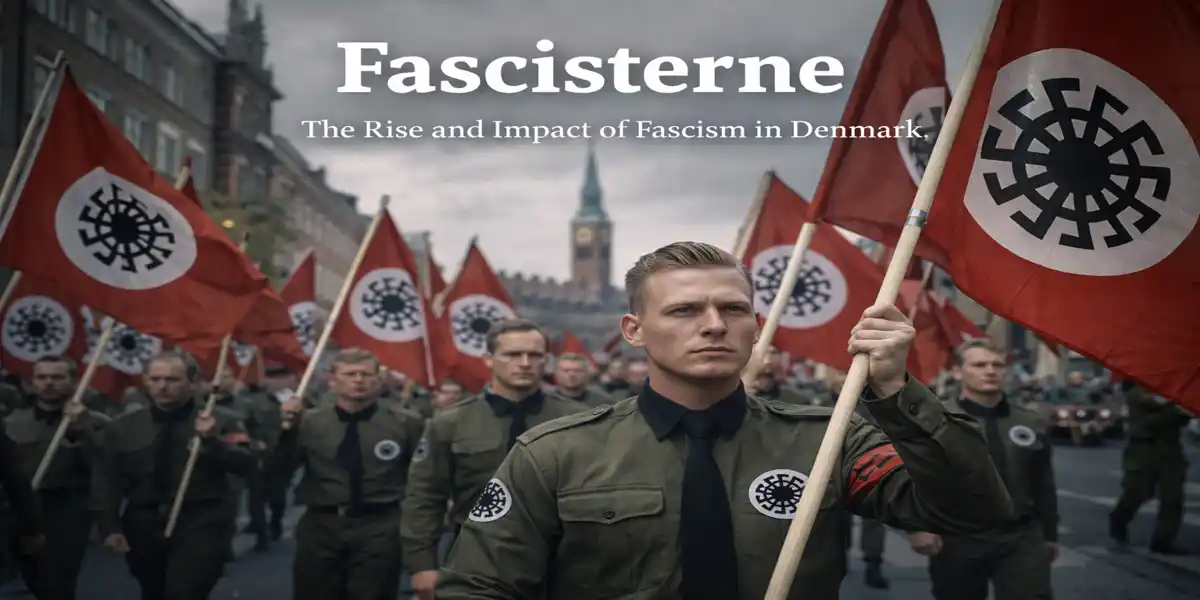
Fascism, an extreme political ideology characterized by authoritarian rule, extreme nationalism, and suppression of opposition, emerged across Europe in the early 20th century.
While countries like Italy and Germany are most often associated with fascism, Denmark also experienced the rise of fascist movements during the 1930s. The fascist ideology in Denmark, collectively known as Fascisterne, played a significant role in the country’s history.
This article examines how Fascisterne emerged, how it affected Denmark, and the ways in which the Danish people responded to this movement.
The Ideology Behind Fascism
Before exploring how Fascisterne manifested in Denmark, it’s important to understand what fascism itself involves. Fascism is a far-right authoritarian ideology that emphasizes absolute loyalty to the state, militarism, anti-communism, and nationalism.
Fascist movements often promise to restore national pride and overcome perceived social and political instability by enforcing strong, centralized leadership.
Fascism often involves:
- Totalitarian control: Centralized power in the hands of a single leader or party.
- Suppression of dissent: Banning opposition parties and controlling the media.
- Militarism and violence: A belief in the power of a strong military and the use of violence to maintain control.
- Racial superiority: Many fascist movements promote racist ideologies, including anti-Semitism.
Fascism was seen as a way to bring order and stability to societies that were grappling with economic downturns and political upheavals.
As the Great Depression of the 1930s created widespread poverty and unemployment, extremist movements like fascism began to appeal to those who sought a way out of the crisis.
The Rise of Fascisme in Denmark: The Birth of Fascisterne
In Denmark, the fascist movement grew in the early 1930s as people were grappling with the aftermath of the Great Depression. The rise of fascism in Europe influenced Denmark, where similar sentiments of nationalism, economic dissatisfaction, and political instability led to the formation of fascist political groups.
The Formation of the Danish National Socialist Workers’ Party
One of the most influential fascist groups in Denmark was the Danish National Socialist Workers’ Party (DNSAP).
Founded in 1930 by Fritz Clausen, the DNSAP adopted a radical nationalist and authoritarian ideology, inspired by the rise of Nazi Germany under Adolf Hitler and fascist Italy under Benito Mussolini.
The DNSAP promoted:
- Nationalism: A strong belief in the supremacy of the Danish state and its people.
- Anti-communism: The party positioned itself against communist ideologies, which were gaining ground in Europe during the time.
- Anti-Semitism: Like other fascist movements, the DNSAP adopted racial theories that targeted Jews and other minority groups.
- Authoritarianism: The party advocated for the establishment of a totalitarian state under a strong leader.
While the DNSAP was a relatively small group in Denmark, its existence and its radical agenda highlighted the rising tensions within Danish society.
How Fascisme Affected Denmark
Although Fascisterne never reached the level of dominance that it did in other European countries, the movement still had a significant impact on Denmark, both politically and socially.
Political Polarization and National Tension
The rise of fascist ideas led to political polarization in Denmark. The country, known for its strong democratic traditions, saw divisions between those who supported the fascist movement and those who strongly opposed it. The growing influence of fascist rhetoric fueled national debates about Denmark’s identity, governance, and future.
Many people in Denmark, particularly from the working class and disillusioned groups, were drawn to the promises of stability and national pride offered by fascist movements.
However, this shift was met with resistance from those who feared the loss of democratic freedoms and the potential for violence and oppression.
The debates and tensions surrounding fascism in Denmark mirrored similar struggles happening across Europe.
The Rise of Fascist Sympathizers
While Denmark’s government largely rejected fascism, fascist sympathizers within the country became more vocal. They believed that Denmark could benefit from a more authoritarian system of government, and they began pushing for closer ties with Nazi Germany.
As Germany’s power grew, some fascist factions within Denmark, including the DNSAP, sought to align themselves with Hitler’s regime, believing that doing so would help bring Denmark greater power and stability.
However, most Danes did not share this view. The country’s leadership resisted the idea of fully embracing Nazi ideology, even as they worked to avoid conflict with Germany.
This reluctance to fully align with fascism placed Denmark in a delicate political position, with fascist sympathizers on one side and a majority of the population determined to preserve Denmark’s democratic values on the other.
Danish Resistance to Fascism and Nazi Occupation
During the German occupation of Denmark in 1940, Denmark’s government made an effort to collaborate with Nazi Germany in order to maintain its sovereignty. However, fascist sympathizers in Denmark were largely marginalized by the broader population, and the Danish resistance movement grew stronger.
The Role of the Danish Resistance
The Danish Resistance played a crucial role in opposing both the Nazi occupation and the fascist ideologies that were spreading within Denmark. Members of the resistance were committed to protecting Denmark’s democratic values and fighting against fascism.
They conducted acts of sabotage, distributed anti-Nazi propaganda, and helped protect Danish Jews from Nazi persecution.
In one of the most significant acts of defiance, the Danish resistance helped thousands of Jews escape Nazi capture in 1943.
They organized a covert operation that helped over 7,000 Danish Jews escape to neutral Sweden, saving their lives from the Holocaust.
This act of resistance was an important turning point in Denmark’s relationship with both Nazi Germany and fascism.
It demonstrated the strength of the Danish people’s commitment to democracy and human rights, even in the face of occupation.
The Fall of Fascisme in Denmark
After the end of World War II, fascist movements in Denmark collapsed. The DNSAP and other fascist organizations were banned, and their leaders were either arrested or forced into exile. Denmark’s post-war recovery was marked by a return to democratic governance, with a clear rejection of fascism and authoritarian rule.
The Aftermath: Lessons Learned
The fall of fascism in Denmark signaled the end of an era of political extremism, but it also left lasting lessons for future generations. The experiences of Fascisterne in Denmark serve as a reminder of the dangers of political extremism and the need to protect democratic values in times of crisis.
While Denmark managed to resist the rise of full fascism, the threat of authoritarianism remains a relevant issue, both in Denmark and around the world.
The Legacy of Fascisme in Denmark Today
While fascism was dismantled in Denmark after World War II, far-right movements have continued to exist in various forms. Today, Denmark still faces political divisions, and extremist ideologies occasionally resurface in response to economic or social tensions.
The Far-right in Modern Denmark
Although neo-fascism in Denmark is not as prominent as it once was, there are still political groups that embrace nationalist and anti-immigrant rhetoric.
These groups sometimes draw upon fascist ideologies, advocating for strong nationalistic policies and a return to more authoritarian systems of governance. While they have not gained significant political power, their presence reminds us of the importance of monitoring and opposing extremism in all its forms.
Denmark’s commitment to human rights, democracy, and tolerance remains steadfast, and the country continues to serve as a model for resisting the resurgence of fascist and far-right ideologies.
The history of Fascisterne in Denmark reminds us of the need to stay vigilant and to protect democratic values, particularly when faced with times of political instability.
Conclusion: Fascisme in Denmark and Its Lasting Impact
The rise of Fascisterne in Denmark was part of a larger pattern of fascist movements that spread across Europe in the 20th century. While Denmark never fully embraced fascism, the political tensions of the 1930s and 1940s left a significant mark on its history.
The DNSAP and other fascist groups attempted to steer Denmark toward authoritarian rule, but they were met with strong resistance from the Danish people, including the Danish Resistance and ordinary citizens who fought to protect Denmark’s democratic values.
Today, Denmark stands as a beacon of democratic ideals, having successfully resisted the forces of fascism and extremism. The lessons of the past—particularly the rise of Fascisterne—remind us of the importance of vigilance, tolerance, and the defense of democratic institutions.
Understanding this history helps us ensure that the mistakes of the past are not repeated in the future.
READ THIS ALSO: How Old is America?