What Is a Monthly Budget
A monthly budget is a plan that helps you manage your money for one month. It shows how much money you earn and how much you spend. When you know where your money goes, you can save more and avoid stress.
Many people think budgeting is hard, but it is actually very simple. It is just a way to tell your money what to do. A good monthly budget helps you pay bills on time, buy what you need, and save for the future.
When you use a budget every month, you feel more in control of your money. You stop worrying and start planning.
Why a Monthly Budget Is Important
A monthly budget helps you understand your income and expenses. Without a plan, money can disappear quickly. Small daily spending can become a big problem at the end of the month.
Budgeting helps you avoid debt and save for important goals. It also helps you prepare for emergencies like medical bills or repairs.
People who use a monthly budget feel more confident because they know they can manage their money well.
How to Make a Monthly Budget
The first step in how to make a monthly budget is to know your total income. Write down all the money you receive in a month. This can include salary, business income, or any extra earnings.
The next step is to list all your expenses. These include rent, food, transport, bills, and other daily costs. Try to write every expense so nothing is missed.
After that, subtract your expenses from your income. If money is left, you can save it. If you spend more than you earn, you need to reduce some expenses.
How Do I Make a Monthly Budget Step by Step
Start by writing your income at the top of a page. Then divide your expenses into two groups. The first group includes needs such as rent, food, and bills. The second group includes wants such as eating out and shopping.
Give priority to your needs first. After that, decide how much you want to save each month. Savings should be treated like an important bill.
Finally, plan how much you can spend on wants. This method keeps your budget balanced and simple.
Track Your Spending Daily
Tracking your spending helps you follow your budget. Write down every expense, even small ones like tea or snacks.
When you track daily spending, you see where your money goes. This helps you control unnecessary expenses.
Many people are surprised when they see how much they spend on small things. Tracking helps you save more.
Use the Fifty Thirty Twenty Rule
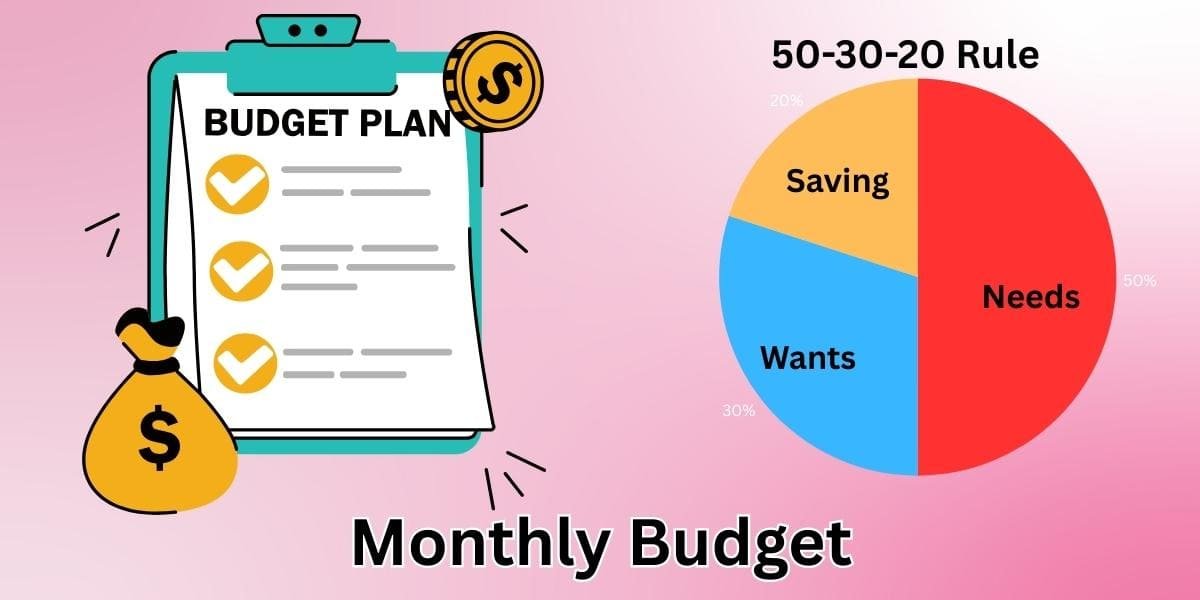
The fifty thirty twenty rule is a simple and practical way to manage your monthly budget. It divides your income into three parts so you can spend, save, and plan wisely. This method helps you control money without feeling stressed.
In this rule, fifty percent of your income is used for your basic needs. These include rent, food, electricity bills, transport, and other important expenses. Needs are the things you must pay for every month.
Thirty percent of your income is used for your wants. Wants are not necessary for living, but make life enjoyable. These include eating out, shopping, entertainment, and hobbies.
The last twenty percent of your income is kept for savings and future goals. This money can be used for emergencies, education, business, or buying something important. Saving regularly builds financial security.
This rule makes budgeting simple and balanced because it gives space for needs, fun, and savings. It also helps you avoid overspending and debt. You can change the percentages based on your income and lifestyle.
Reduce Unnecessary Expenses
Cutting unnecessary expenses helps you stay within your budget. Try to reduce eating out, online shopping, and unused subscriptions.
Small changes can make a big difference. Cooking at home and using public transport can save money.
Saving on small things every day increases your monthly savings.
Plan for Savings
Savings are an important part of a monthly budget. Always keep some money for future needs.
Savings help you handle emergencies without stress. They also help you achieve long-term goals like buying a house or starting a business.
Make saving a habit by setting aside money at the beginning of the month.
Use Cash or Digital Tools
You can use cash envelopes for different expenses. This helps you control spending because you see how much money is left.
You can also use mobile apps or spreadsheets to track your budget. These tools make budgeting easy and fast.
Choose the method that works best for you.
Review Your Budget Every Month
At the end of each month, review your budget. Check where you spent more and where you saved.
This helps you improve your budget for the next month. Budgeting is a learning process that becomes better with time.
Regular review keeps your plan accurate and useful.
Budget for Irregular Expenses
Some expenses do not happen every month, such as gifts, repairs, or school fees. It is important to plan for them.
Keep a small amount every month for these expenses. This prevents financial stress when it appears.
Planning ahead makes your budget strong.
Also Read This: Little Minaxo: Understanding NFL Rookie Salaries: A Comprehensive Guide
Involve Your Family in Budgeting
If you live with family, involve them in the budgeting process. When everyone knows the plan, they spend more carefully.
Family budgeting builds teamwork and financial discipline. It also helps children learn money management.
A shared budget creates better financial habits.
Common Budgeting Mistakes to Avoid
One common mistake is not tracking small expenses. Another mistake is not saving regularly.
Some people make a budget but do not follow it. A budget works only when you use it daily.
Avoid being too strict because it can make budgeting stressful. Keep it simple and realistic.
Benefits of a Monthly Budget
A monthly budget reduces financial stress because you know exactly how much money you have and where it will be used. This clear plan removes confusion and helps you avoid sudden money problems. When your spending is controlled, you feel more relaxed and confident.
It also helps you save for your short term and long term goals. You can set money aside for education, a phone, travel, or an emergency fund. At the same time, budgeting helps you avoid unnecessary loans and debt.
A monthly budget builds discipline and better spending habits. You start thinking before buying and focus on what is truly important. Over time, this simple habit improves your financial life and creates long term stability.
Monthly Budget for Students
Students can also use a monthly budget. They should track pocket money, food, transport, and study expenses.
Saving a small amount every month helps in emergencies. Avoiding unnecessary spending helps students stay within their budget.
Learning budgeting early creates strong financial habits for the future.
Monthly Budget for Families
Families usually have many types of expenses, so a monthly budget becomes very important for them. They need to plan for food, school fees, utility bills, transport, and healthcare. When these costs are written and managed properly, money problems can be reduced.
A family budget should also include savings for emergencies and future goals. Keeping money for medical needs, home repairs, or children’s education provides financial protection. This planning helps families stay prepared for unexpected situations.
When all family members follow the budget, spending becomes more careful and controlled. This creates stability, reduces stress, and brings peace of mind. A well planned family budget helps build a secure and comfortable future.
Monthly Budget for Low Income
Even with a low income, budgeting is possible. The focus should be on needs, savings, and reducing waste.
Small savings every month can grow over time. Careful planning helps in managing limited money.
Budgeting helps low income households stay stable.
Conclusion
A monthly budget is a simple and powerful tool for managing money. It helps you control spending, save for the future, and avoid financial stress.
Learning how to make a monthly budget and following it daily improves your financial life. Tracking expenses, reducing waste, saving regularly, and reviewing your plan every month make budgeting successful.
Anyone can start budgeting with simple steps. A good budget creates confidence, security, and long-term success.
FAQs
1. What is a monthly budget?
A monthly budget is a plan that shows your income and expenses for one month.
2. How do I make a monthly budget easily?
Write your income, list your expenses, save some money, and control your spending.
3. Why is budgeting important?
Budgeting helps you manage money, save for goals, and avoid debt.
4. How much should I save every month?
Saving at least twenty percent of your income is a good goal if possible.
5. Can students use a monthly budget?
Yes, students can track their spending and save small amounts every month.
6. What is the biggest benefit of a monthly budget?
It gives you control over your money and reduces financial stress.