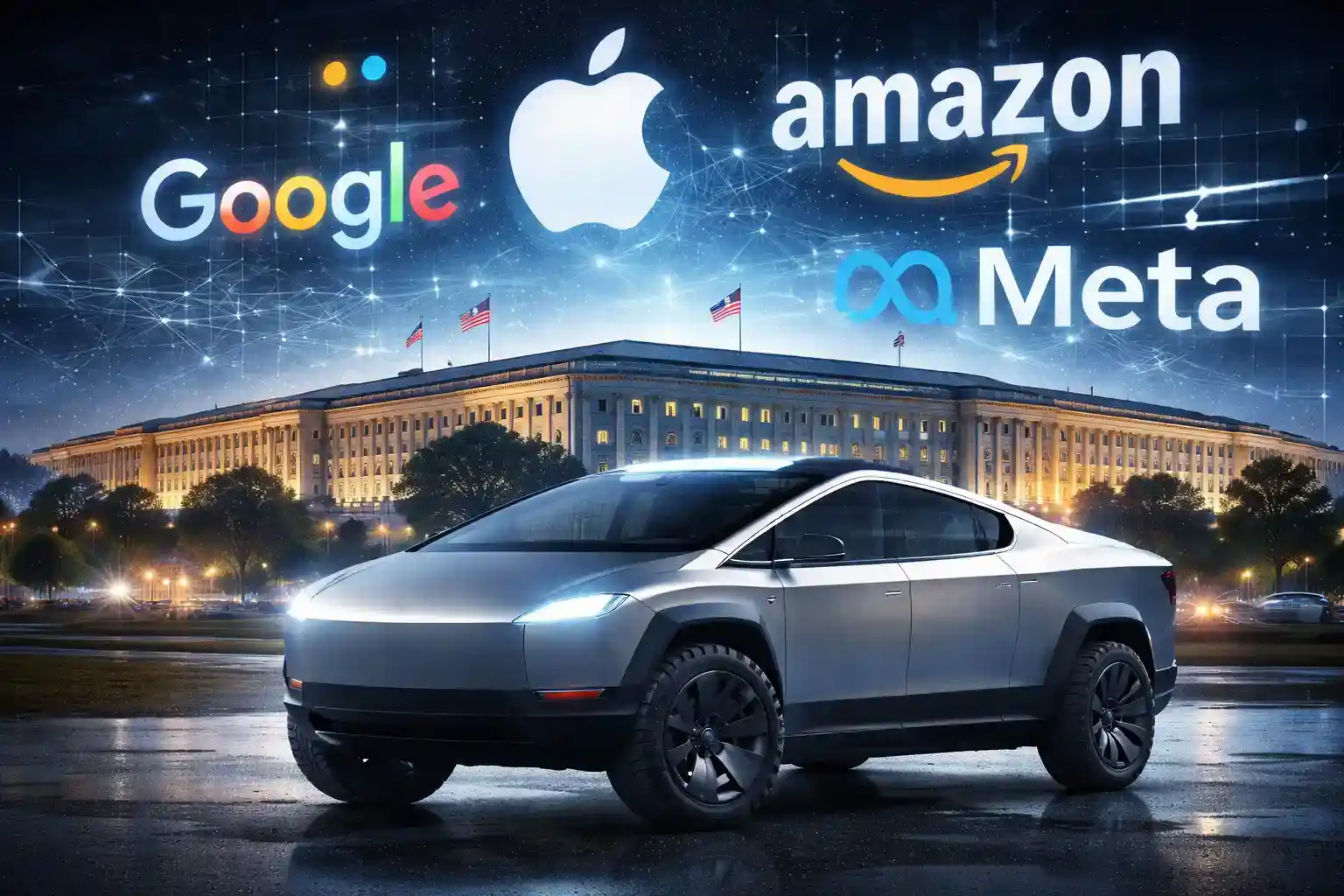
The intersection of Big Tech, military innovation, and electric vehicles has never been more relevant. As the U.S. Pentagon seeks to modernize its military capabilities with cutting-edge technology, companies like Tesla are at the forefront of this transformation.
Among Tesla’s most iconic innovations is the Cybertruck, an electric vehicle designed to challenge traditional notions of durability, utility, and technology. But could this futuristic vehicle find a place in the military?
This article explores the growing partnership between the Pentagon and Big Tech companies like Tesla, specifically focusing on the Cybertruck and its potential applications for the military.
Defining the Role of Big Tech in the Pentagon’s Future
The Pentagon, the heart of the U.S. Department of Defense, is tasked with safeguarding national security through innovation, technology, and strategy.
In recent years, the Pentagon has recognized that the private tech sector holds the key to future defense systems, leveraging cutting-edge advancements in artificial intelligence (AI), machine learning, cloud computing, and electric vehicles.
Why the Pentagon Partners with Big Tech
Big Tech companies have revolutionized industries by focusing on scalability, efficiency, and disruptive technologies.
The Pentagon has recognized the power of these companies to innovate and adapt at a speed that traditional defense contractors cannot match.
By collaborating with Amazon, Google, Microsoft, and Tesla, the Pentagon aims to harness advanced data analytics, secure cloud services, and next-generation vehicles to enhance military operations and ensure operational supremacy.
The Pentagon’s Collaboration with Tesla and Big Tech
The collaboration between the Pentagon and Tesla is not merely speculative. Tesla’s groundbreaking work in electric vehicles (EVs) and autonomous systems is exactly what the Pentagon needs to transition into a more sustainable, tech-driven future.
Through these collaborations, the Pentagon is positioning itself to lead the charge in environmental responsibility, cybersecurity, and autonomous warfare, ultimately modernizing its operations to meet the challenges of a rapidly evolving world.
READ THIS ALSO: Resomee An Australian AI Company and Expert AI Adviser
The Tesla Cybertruck: A Revolutionary Electric Vehicle
What Makes the Cybertruck Stand Out?
The Tesla Cybertruck is far from a conventional electric pickup. Tesla’s bold approach to vehicle design broke away from traditional aesthetics, offering an angular, futuristic look that contrasts with the sleek lines of conventional trucks.
But beneath its exterior, the Cybertruck is equipped with groundbreaking technology that makes it a perfect candidate for military operations. Let’s break down its key features:
- Durable Exoskeleton: The Cybertruck is constructed with a cold-rolled stainless steel exoskeleton, designed to withstand dents, scratches, and corrosion, making it highly resilient under rugged conditions, similar to military-grade vehicles.
- Electric Drivetrain: Tesla’s electric powertrain allows the Cybertruck to provide instant torque, remarkable acceleration, and better energy efficiency compared to traditional combustion engine vehicles, crucial for military operations where quick mobility is essential.
- Advanced Autonomous Driving: Tesla’s autopilot technology enables autonomous driving, which could be leveraged for reconnaissance missions, supply transport, and even battlefield operations with minimal human intervention.
- Off-Road Capabilities: With all-terrain performance, high ground clearance, and robust tires, the Cybertruck can navigate rough environments, a key attribute for military applications in challenging terrains like deserts, mountains, or urban areas.
Real-World Military Applications of the Tesla Cybertruck
The Cybertruck is not just a civilian vehicle—its unique features present several potential applications in military settings, from logistics and transportation to surveillance and reconnaissance.
Military Logistics and Supply Chains
Logistics is a critical component of military operations, especially when it comes to sustaining troops and ensuring they have the necessary resources. Traditional military vehicles, such as Humvees or MRAPs, are often large and fuel-dependent.
The Cybertruck’s electric powertrain offers a potential alternative, reducing dependence on traditional fuel supplies and offering a more environmentally friendly solution.
The vehicle’s durability, payload capacity, and off-road capabilities make it ideal for transporting equipment, supplies, and personnel in challenging environments.
The ability to deploy electric vehicles, like the Cybertruck, could drastically reduce fuel consumption in combat zones, particularly in remote or urban areas where supply chains are difficult to maintain.
Cybertruck as a Reconnaissance Vehicle
One of the most compelling potential military applications for the Cybertruck lies in reconnaissance. The vehicle’s autonomous driving features and low operational noise provide advantages for surveillance operations, making it ideal for stealthy missions.
For example, military drones and vehicles equipped with autonomous capabilities can scout enemy positions, monitor movements, and even navigate hazardous areas without risking human lives.
The Cybertruck’s silent operation, compared to traditional diesel-powered vehicles, could be a game-changer in operations where maintaining a low profile is paramount.
Its ability to travel undetected and autonomously would be an advantage for special forces or recon units operating behind enemy lines.
Tactical Operations and Mobility
The Cybertruck’s rugged build, coupled with its electric drivetrain, could make it a viable option for special operations forces that require mobility across difficult terrains.
Traditional military vehicles can be noisy and cumbersome, but the Cybertruck’s efficiency in urban or rural terrains could provide military units with greater agility and speed.
In addition, the Tesla Cybertruck’s onboard sensors and AI-driven software could enhance real-time decision-making during tactical operations, helping troops navigate unknown or hostile environments safely and efficiently.
Comparing the Tesla Cybertruck to Traditional Military Vehicles
The Cybertruck introduces a fundamental shift in how military vehicles could operate, especially in terms of sustainability, mobility, and stealth. Here’s how the Cybertruck compares to traditional military vehicles:
Durability and Efficiency
Traditional military vehicles are often built with heavy armored exteriors that make them durable but also contribute to fuel inefficiency.
The Cybertruck, while not armored in the traditional sense, uses its stainless steel exoskeleton to provide a high level of durability without the added weight, enabling it to operate more efficiently in both off-road and combat scenarios.
Stealth and Environmental Impact
Diesel-powered military vehicles are loud and produce substantial emissions. In contrast, the electric nature of the Cybertruck ensures near-silent operation, crucial for missions that require stealth.
Additionally, the Cybertruck’s eco-friendly battery system aligns with the Pentagon’s interest in reducing carbon emissions in its vehicle fleet, making it a more sustainable alternative to conventional military vehicles.
Autonomy vs. Manual Operation
While traditional military vehicles rely on human drivers, the Tesla Cybertruck’s autonomous capabilities could allow for unmanned operations, where vehicles are sent on reconnaissance or supply missions without risking human lives.
The vehicle’s AI-driven technology could significantly reduce human error and enhance overall operational efficiency.
Future Implications: The Evolving Role of Big Tech in Military Operations
Advancements in Artificial Intelligence and Automation
As AI and autonomous systems continue to evolve, the military’s reliance on Big Tech will only increase. Tesla’s autonomous driving technology is just the beginning of a new wave of military automation.
These technologies could reduce the need for human soldiers in hazardous environments, automate complex operations, and enhance decision-making in real-time.
Ethical Considerations of Autonomous Warfare
The use of autonomous technologies, like the Cybertruck’s AI capabilities, raises critical ethical questions. While AI-driven military systems can improve efficiency, they also pose risks related to accountability and decision-making.
If an autonomous vehicle makes a harmful or unintended decision, who is responsible? These ethical challenges will require careful consideration as the Pentagon integrates more autonomous systems into its operations.
The Shift Toward Sustainability
As the Pentagon looks for sustainable alternatives to traditional military equipment, the Cybertruck’s electric drivetrain offers a compelling solution.
The military’s carbon footprint has been a growing concern, and using electric vehicles in the field could significantly reduce the environmental impact of military operations, especially in logistical tasks and transportation.
Best Practices for Integrating Electric Vehicles into Military Operations
Strategic Adoption of Electric Military Vehicles
For the Pentagon to successfully integrate electric vehicles like the Cybertruck, it must adopt a phased approach:
- Research & Development: Collaborate with Tesla and other tech companies to enhance the Cybertruck’s military-specific features.
- Field Testing: Conduct rigorous field tests in various environments to assess performance, reliability, and efficiency.
- Ethical Guidelines: Establish clear ethical guidelines for the use of autonomous technologies in military contexts to ensure accountability and responsible decision-making.
Conclusion: Pentagon Big Tech Tesla Cybertruck
The convergence of Big Tech, Tesla, and the Pentagon marks the beginning of a new era in military innovation. The Cybertruck, with its electric powertrain, autonomous features, and sustainability, could play a vital role in shaping the future of military operations.
As the military embraces these advanced technologies, we will likely see a shift toward more efficient, eco-friendly, and autonomous defense systems.
The integration of technologies like the Cybertruck into military fleets offers a glimpse into the future of warfare—one where sustainability, technology, and human oversight combine to create safer, more efficient military operations.